ACSL4 antibody
Principal name
ACSL4 antibody
Alternative names for ACSL4 antibody
ACS4, FACL4, LACS4, Long-chain-fatty-acid--CoA ligase 4, Long-chain acyl-CoA synthetase 4
Ncbi ID
9606, NP_004449, NM_004458, NP_075266, 5874, NP_004449.1, NP_001028772.1, NM_207625, NM_053623
Available reactivities
Available hosts
Available applications
Enzyme Immunoassay (E), Western blot / Immunoblot (WB), Paraffin Sections (P), Immunocytochemistry/Immunofluorescence (ICC/IF)
Background of ACSL4 antibody
Long chain acyl-CoA synthetase (LACS), or long chain fatty acid-CoA ligase (FACL), converts free long chain fatty acids into fatty acyl-CoA esters, key intermediates in the synthesis of complex lipids. The FACL4 gene encodes a form of LACS and is expressed in several tissues, including brain. FACL4 cDNA from brain encodes a gene product that shows preference for arachidonic acid as a substrate when expressed in mammalian cells.1 The sequence of the predicted 670-amino acid human protein is 97% identical to that of rat ACS4. FACL4 is highly expressed in adult human brain, especially in the cerebellum and hippocampus, similar to the mouse.2 A strong cytoplasmic staining was found in the Purkinje and granular cells of the cerebellum and the pyramidal layer of hippocampus, indicating that FACL4 is specifically expressed in neurons and not in glial cells. Two patients with Alport syndrome, elliptocytosis, and mental retardation carried a large deletion of the COL4A5 region that included FACL4.3 The absence of FACL4 might play a role in the development of mental retardation or other signs associated with Alport syndrome. Two point mutations, 1 missense and 1 splice site change, were reported in the FACL4 gene in 2 families with nonspecific mental retardation.2 Analysis of enzymatic activity in lymphoblastoid cell lines of affected individuals revealed low levels compared with normal cells, indicating that both mutations are null mutations.
General readings
Piccini M, Vitelli F, Bruttini M, Pober BR, Jonsson JJ, Villanova M, Zollo M, Borsani G, Ballabio A, Renieri A. FACL4, a new gene encoding long-chain acyl-CoA synthetase 4, is deleted in a family with Alport syndrome, elliptocytosis, and mental retardation. Genomics. 1998 Feb 1;47(3):350-8.


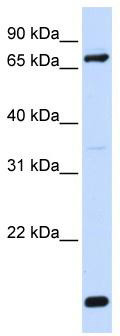
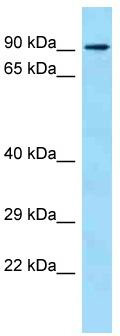
Primary Antibodies
| Catalog No. | Host | Iso. | Clone | Pres. | React. | Applications | |
|---|---|---|---|---|---|---|---|
| TA311299 | ACSL4 (C-term) antibody |
||||||
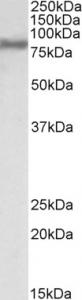
| Goat Anti-FACL4 / ACSL4 Antibody | |||||||
 |
Goat | Aff - Purified | Bov, Can, Hu, Ms, Por, Rt | E, WB |
0.1 mg /
€360.00
|
||
| OriGene Technologies, Inc. | |||||||
| TA324720 | ACSL4 antibody |
||||||
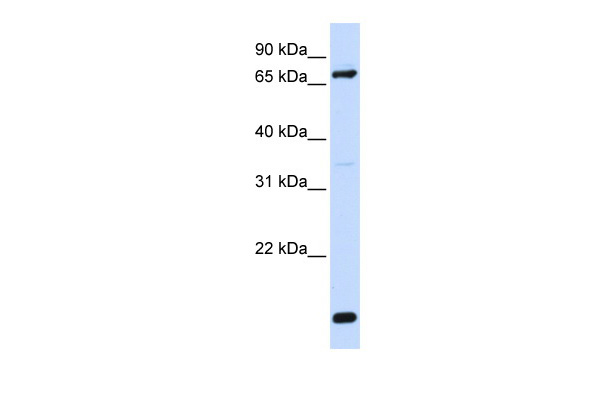
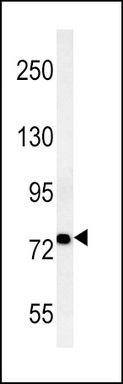
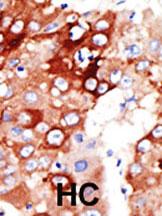
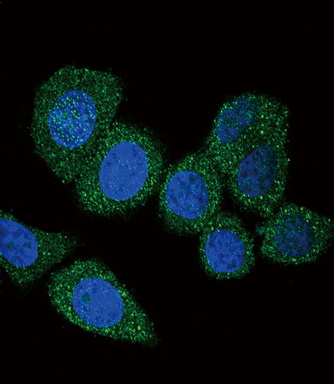
| Rabbit polyclonal ACSL4 (FACL4) Antibody (Center) | |||||||
 |
Rabbit | Ig | Purified | Hu | ICC/IF, P, WB |
0.4 ml /
€415.00
|
|
| OriGene Technologies, Inc. | |||||||
 +2 additional images +2 additional images |
|||||||
| TA327994 | ACSL4 antibody |
||||||
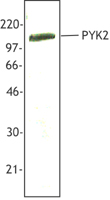
| Rabbit Polyclonal anti-PYK2 Antibody | |||||||
 |
Rabbit | IgG | Poly6053 | Purified | Hu, Ms, Rt | WB |
0.2 ml /
€255.00
|
| OriGene Technologies, Inc. | |||||||
Proteins & Growth Factors
| Catalog No. | Species | Pres. | Purity | Source | |
|---|---|---|---|---|---|
| TP305356 | ACSL4 (transcript variant 1) |
||||
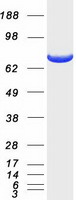
| Recombinant protein of human acyl-CoA synthetase long-chain family member 4 (ACSL4), transcript variant 1 | |||||
 |
Human | > 80 % Preparation: Recombint protein was captured through anti-DDK affinity column followed by conventiol chromatography steps. Purity Detail: > 80% as determined by SDS-PAGE and Coomassie blue staining. |
HEK293 cells |
20 µg /
€748.00
|
|
| OriGene Technologies, Inc. | |||||
| TP321413 | ACSL4 (transcript variant 2) |
||||
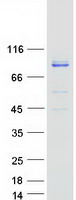
| Recombinant protein of human acyl-CoA synthetase long-chain family member 4 (ACSL4), transcript variant 2 | |||||
 |
Human | > 80 % Preparation: Recombint protein was captured through anti-DDK affinity column followed by conventiol chromatography steps. Purity Detail: > 80% as determined by SDS-PAGE and Coomassie blue staining. |
HEK293 cells |
20 µg /
€748.00
|
|
| OriGene Technologies, Inc. | |||||
Lysates
| Catalog No. | ||
|---|---|---|
| LY401417 | ACSL4 overexpression lysate |
|
 |
0.1 mg /
€295.00
|
|
| OriGene Technologies, Inc. |
Human Lenti ORF Particles
| Catalog No. | ||
|---|---|---|
| RC205356L1V | Lenti ORF particles, ACSL4 (Myc-DDK tagged) - Human acyl-CoA synthetase long-chain family member 4 (ACSL4), transcript variant 1 , 200 uL, >10^7 TU/mL |
|
|
200 µl /
€1,000.00
|
|
| OriGene Technologies, Inc. | ||
Mouse Lenti ORF Particles
| Catalog No. | ||
|---|---|---|
| MR210200L2V | Lenti ORF particles, Acsl4 (GFP-tagged) - Mouse acyl-CoA synthetase long-chain family member 4 (Acsl4), transcript variant 1, 200 uL, >10^7 TU/mL |
|
|
200 µl /
€1,470.00
|
|
| OriGene Technologies, Inc. | ||
| MR210200L1V | Lenti ORF particles, Acsl4 (Myc-DDK-tagged) - Mouse acyl-CoA synthetase long-chain family member 4 (Acsl4), transcript variant 1, 200 uL, >10^7 TU/mL |
|
|
200 µl /
€1,330.00
|
|
| OriGene Technologies, Inc. | ||
Rat Lenti ORF Particles
| Catalog No. | ||
|---|---|---|
| RR205894L2V | Lenti ORF particles, Acsl4 (GFP-tagged ORF) - Rat acyl-CoA synthetase long-chain family member 4 (Acsl4), 200 uL, >10^7 TU/mL |
|
|
200 µl /
€1,420.00
|
|
| OriGene Technologies, Inc. | ||
| RR205894L1V | Lenti ORF particles, Acsl4 (Myc-DDK-tagged ORF) - Rat acyl-CoA synthetase long-chain family member 4 (Acsl4), 200 uL, >10^7 TU/mL |
|
|
200 µl /
€1,280.00
|
|
| OriGene Technologies, Inc. | ||