BBS10 antibody
Principal name
BBS10 antibody
Alternative names for BBS10 antibody
C12orf58, Bardet-Biedl syndrome 10 protein
Ncbi ID
Available reactivities
Available hosts
Available applications
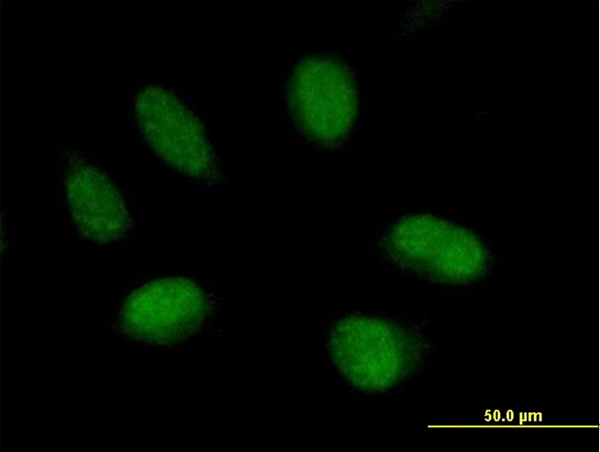
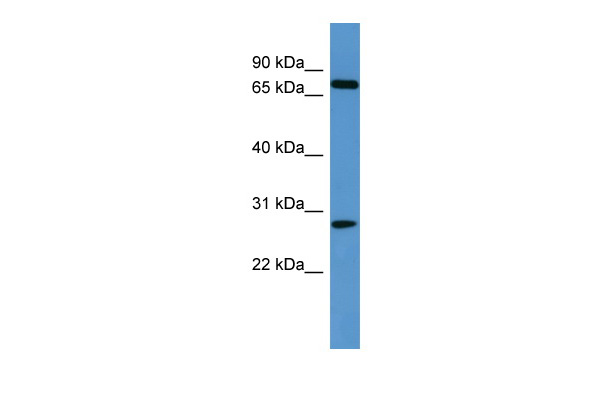
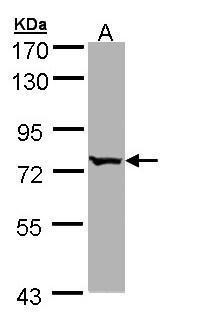
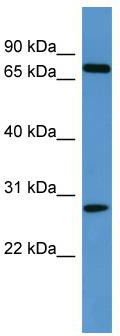
ELISA (detection) (E(detection)), Immunocytochemistry/Immunofluorescence (ICC/IF), Western blot / Immunoblot (WB), Paraffin Sections (P)
Background of BBS10 antibody
This gene is a member of the Bardet-Biedl syndrome (BBS) gene family. Bardet-Biedl syndrome is an autosomal recessive disorder characterized by progressive retil degeneration, obesity, polydactyly, rel malformation and mental retardation. The proteins encoded by BBS gene family members are structurally diverse and the similar phenotypes exhibited by mutations in BBS gene family members is likely due to their shared roles in cilia formation and function. Many BBS proteins localize to the basal bodies, ciliary axonemes, and pericentriolar regions of cells. BBS proteins may also be involved in intracellular trafficking via microtubule-related transport. The protein encoded by this gene is likely not a ciliary protein but rather has distant sequence homology to type II chaperonins. As a molecular chaperone, this protein may affect the folding or stability of other ciliary or basal body proteins. Inhibition of this protein's expression impairs ciliogenesis in preadipocytes. Mutations in this gene cause Bardet-Biedl syndrome type 10.


Primary Antibodies
| Catalog No. | Host | Iso. | Clone | Pres. | React. | Applications | |
|---|---|---|---|---|---|---|---|
| TA308059 | BBS10 antibody |
||||||
| Rabbit Polyclonal antibody to BBS10 (Bardet-Biedl syndrome 10) | |||||||
 |
Rabbit | IgG | Aff - Purified | Hu | P, WB |
0.1 ml /
€415.00
|
|
| OriGene Technologies, Inc. | |||||||
 +1 additional image +1 additional image |
|||||||
Lysates
| Catalog No. | ||
|---|---|---|
| LY411145 | BBS10 overexpression lysate |
|
 |
0.1 mg /
€295.00
|
|
| OriGene Technologies, Inc. |

