CD299 / CLEC4M antibody
Principal name
CD299 / CLEC4M antibody
Alternative names for CD299 / CLEC4M antibody
CD209L, CD209L1, C-type lectin domain family 4 member M, CD209 antigen-like protein 1, Dendritic cell-specific ICAM-3-grabbing non-integrin 2, DC-SIGN-related protein, Liver/lymph node-specific ICAM-3-grabbing non-integrin
SwissProt ID
Q9H2X3 (Human)
Gene ID
10332 (CLEC4M)
Ncbi ID
9606, NP_055072, NP_999842, NP_001138377.1, NM_014257, NM_214675, NM_001144906
Available reactivities
Available hosts
Available applications
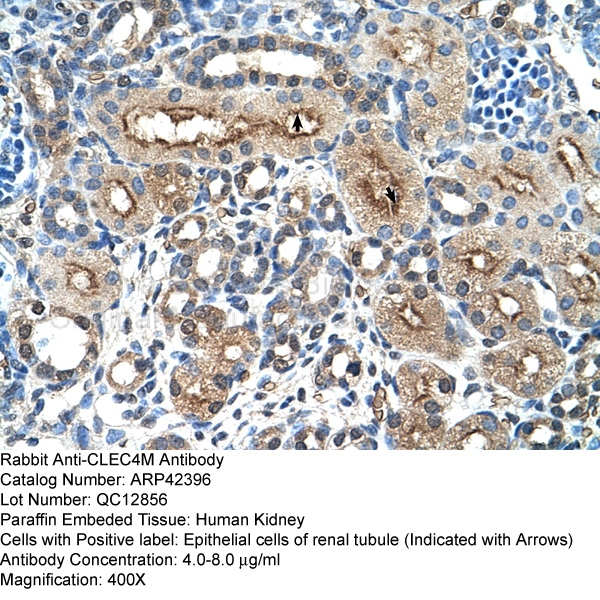
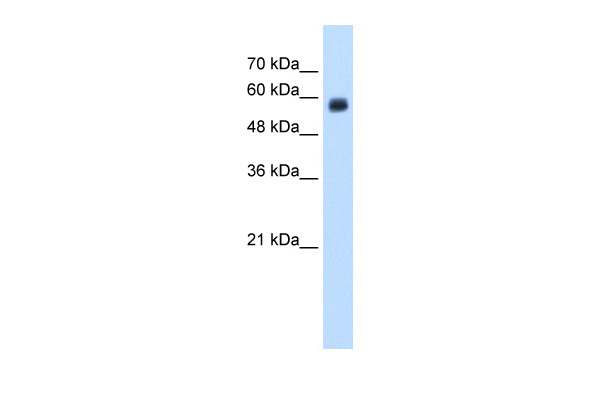
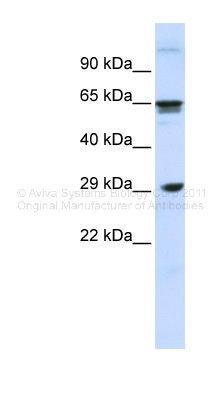
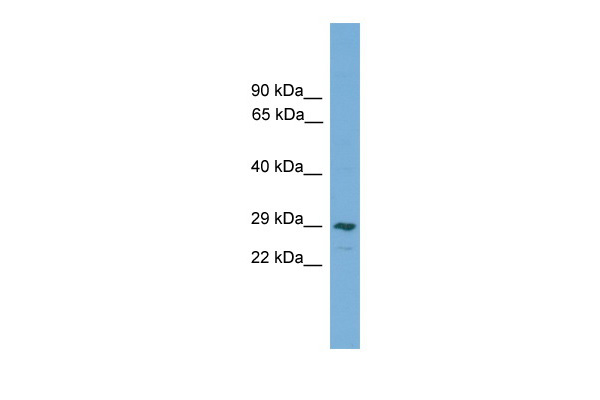
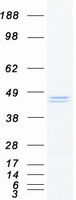
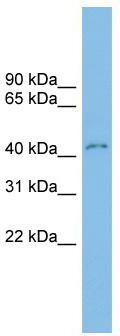
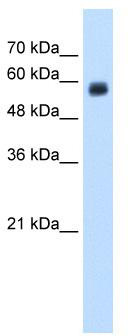
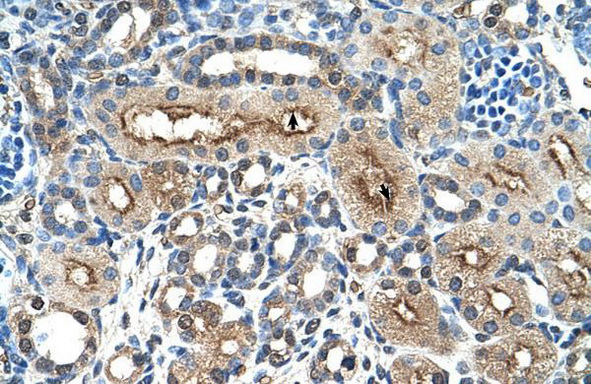
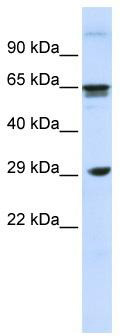
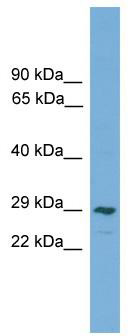
Enzyme Immunoassay (E), Western blot / Immunoblot (WB), Paraffin Sections (P)
Background of CD299 / CLEC4M antibody
CLEC4M is a transmembrane receptor and is often referred to as L-SIGN because of its expression in the endothelial cells of the lymph nodes and liver. It is involved in the innate immune system and recognizes numerous evolutionarily divergent pathogens ranging from parasites to viruses, with a large impact on public health. The protein is organized into three distinct domains: an N-terminal transmembrane domain, a tandem-repeat neck domain and C-type lectin carbohydrate recognition domain. The extracellular region consisting of the C-type lectin and neck domains has a dual function as a pathogen recognition receptor and a cell adhesion receptor by binding carbohydrate ligands on the surface of microbes and endogenous cells. The neck region is important for homo-oligomerization which allows the receptor to bind multivalent ligands with high avidity. Variations in the number of 23 amino acid repeats in the neck domain of this protein are common and have a significant impact on ligand binding ability. This gene is closely related in terms of both sequence and function to a neighboring gene (GeneID 30835; often referred to as DC-SIGN or CD209). DC-SIGN and L-SIGN differ in their ligand-binding properties and distribution. Alternative splicing results in multiple variants.This gene encodes a type II integral membrane protein that is 77% identical to CD209 antigen, a HIV gp120-binding protein. This protein, like CD209, efficiently binds both intercellular adhesion molecule 3 (ICAM3) and HIV-1 gp120, and enhances HIV-1 infection of T cells. This gene is mapped to 19p13.3, in a cluster with the CD209 and CD23/FCER2 genes. Multiple alternatively spliced transcript variants have been found for this gene, but the biological validity of some variants has not been determined.
General readings
Liu,H., (2006) J. Infect. Dis. 193 (5), 698-702
Proteins & Growth Factors
| Catalog No. | Species | Pres. | Purity | Source | |
|---|---|---|---|---|---|
| TP307947 | CD299 / CLEC4M (transcript variant 1) |
||||
| Recombinant protein of human C-type lectin domain family 4, member M (CLEC4M), transcript variant 1 | |||||
 |
Human | > 80 % Preparation: Recombint protein was captured through anti-DDK affinity column followed by conventiol chromatography steps. Purity Detail: > 80% as determined by SDS-PAGE and Coomassie blue staining. |
HEK293 cells |
20 µg /
€748.00
|
|
| OriGene Technologies, Inc. | |||||
Lysates
| Catalog No. | ||
|---|---|---|
| LY402300 | CLEC4M overexpression lysate |
|
 |
0.1 mg /
€295.00
|
|
| OriGene Technologies, Inc. |
Human Lenti ORF Particles
| Catalog No. | ||
|---|---|---|
| RC211716L2V | Lenti ORF particles, CLEC4M (mGFP-tagged) - Human C-type lectin domain family 4, member M (CLEC4M), transcript variant 2, 200 uL, >10^7 TU/mL |
|
|
200 µl /
€1,110.00
|
|
| OriGene Technologies, Inc. | ||