CHERP antibody
Principal name
CHERP antibody
Alternative names for CHERP antibody
ERPROT 213-21, DAN26, SCAF6, Calcium homeostasis endoplasmic reticulum protein, SR-related CTD-associated factor 6
Ncbi ID
Available reactivities
Available hosts
Available applications
Enzyme Immunoassay (E), Western blot / Immunoblot (WB), ELISA (detection) (E(detection)), Frozen Sections (C), Immunoprecipitation (IP)
Background of CHERP antibody
The Calcium homoeostasis endoplasmic reticulum protein (CHERP) gene has been recently identified and localized on chromosome 19p13.1. The CHERP has high homology to a SR-related CTD protein, which is known to interact with largest subunit of RNA polymerase II (2). CHERP is an integral endoplasmic reticulum membrane protein is involved in calcium mobilization induced by thrombin. The confocal microscopy revealed that CFERP is associated with Ins(1,4,5)P3 receptor throughout the cytoplasm and perinuclear region in Jurkat T lymphocyte (1). CHERP Anti-sense treatment induced decrease in CHERP caused an impaired increase in free cytoplasmic calcium but calcium influx remains unaffected, with some deficient in endoplasmic reticulum calcium stores (1). In the CHERP depleted Jurkat T lymphocytes the calcium dependent translocation of nuclear factor of activated T cells (NFAT) from cytoplasm to nucleus was also suppressed with significant suppression of cell (1).
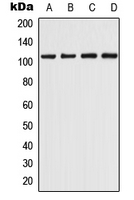
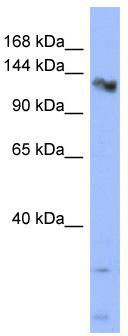
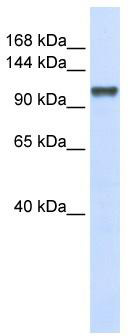
CHERP is an endoplasmic integral membrane protein. the CHERP mRNA is expressed ubiquitously in various tissues including lung, brain, heart, pancreas, kidney and skeletal muscle. CHERP is a 883 amino acid protein (100 kDa) with theoretical PI of 9.46. there exist a 5’ Kozak sequence with another inframe start codon that could possible generate a variant with 32 extra amino acids. The CHERP has two transmembrane domains characteristic feature of ion channels with several possible protein protein interaction sites (3). There are several Serine/Threonine phosphorylation sites (PKA, PKC, casein kinase, and glycogen synthese kinase) near the C-terminal end of the protein. Several tyrosine kinase sites are also present out side the serine/threonine kinase domain.
General readings
Laplante,J.M., Biochem. J. 348 PT 1, 189-199 (2000)
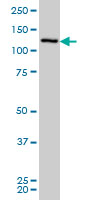
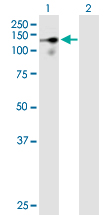
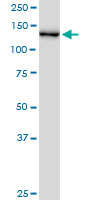

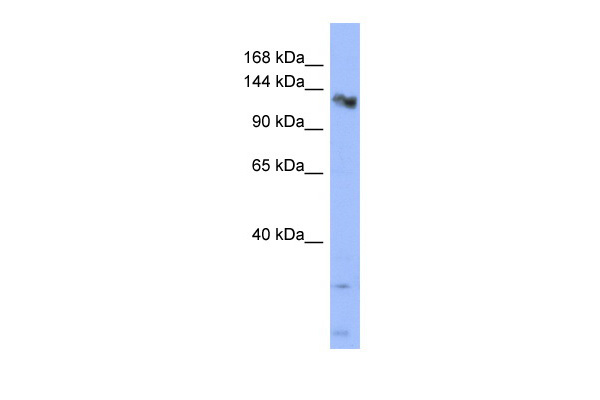
Lysates
| Catalog No. | ||
|---|---|---|
| LY401919 | CHERP overexpression lysate |
|
 |
0.1 mg /
€295.00
|
|
| OriGene Technologies, Inc. |