FGFR1 antibody
Principal name
FGFR1 antibody
Alternative names for FGFR1 antibody
BFGFR, CEK, FGFBR, FLG, FLT2, HBGFR, BFGFR, bFGF-R-1, FLT-2, N-sam, Proto-oncogene c-Fgr, Basic fibroblast growth factor receptor 1, Fms-like tyrosine kinase 2, Fibroblast growth factor receptor 1
SwissProt ID
A4IFL5 (Bovin), P11362 (Human), P16092 (Mouse), P21804 (Chick), P22182 (Xenla), Q04589 (Rat)
Ncbi ID
NP_001167534.1, NP_056934, 9606, NP_001167534, NM_023110, NM_023106, NM_015850, NP_075598, NP_075594, NP_075593, NM_010206, NM_001079908, NM_001079909, NM_024146, NM_023107, NM_023108, NM_001174066, NM_001174064, NM_001174065, NM_001174063, NM_001174067
Available reactivities
Available hosts
Available applications
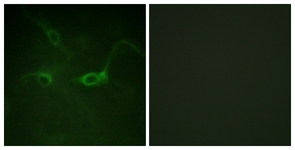
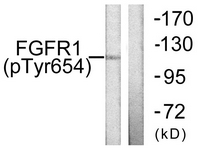
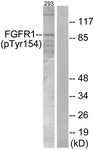
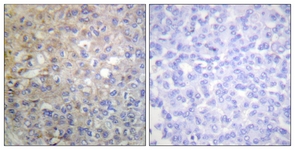
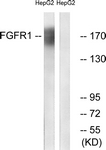
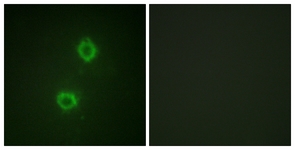
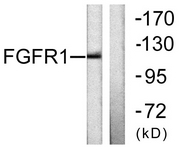
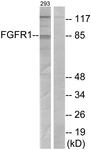
Immunocytochemistry/Immunofluorescence (ICC/IF), Western blot / Immunoblot (WB), Paraffin Sections (P), Enzyme Immunoassay (E), Immunoprecipitation (IP)
Background of FGFR1 antibody
FGFR1 (fibroblast growth factor receptor 1) is a member of the fibroblast growth factor receptor family and contains an Ig-like domain and a tyrosine kinase domain. This receptor has multiple isoforms and is a Type I membrane protein. FGFR1 is widely expressed, with distinct isoforms expressed in specific tissues. FGFR1 binds fibroblast growth factor and induces mitogenesis and cellular differentiation. Defects in FGFR1 result in Pfeiffer syndrome associated with craniosynostosis. FGFR1 can be modified by phosphorylation and can bind basic/acidic fibroblast factor depending on the receptor isoform. FGFR1 has been shown to interact with N-cadherin and NCAM.
Fibroblast growth factors (FGFs) are members of a large family of structurally related polypeptides (17-38 kDa) that are potent physiological regulators of growth and differentiation of a wide variety of cells of mesodermal, ectodermal and endodermal origin. FGFs are substantially involved in normal development, wound healing and repair, angiogenesis, a variety of neurotrophic activities, in hematopoiesis as well as in tissue remodeling and maintenance. They also have been implicated in pathological conditions such as tumorigenesis and metastasis. To date, the FGF family consists of at least 23 members designated FGF1 through FGF23. Four genes encoding for high affinity cell surface FGF receptors (FGFRs) have been identified: FGFR1 [flg-1(fms-like gene 1)]; FGFR2 [bek (bacterial expressed kinase gene product)]; FGFR3 (cek-2), and FGFR4. Multiple additional variants (isoforms) arising by alternative splicing have been reported: soluble, secreted, or possibly cleaved forms of FGFR1 and FGFR2 have also been found in body fluids or were artificially constructed, [e.g. a soluble FGF-binding protein containing the extracellular region of FGFR1 and the secreted form of placental alkaline phosphatase (FRAP1)].
FGFRs are members of the tyrosine kinase family of growth factor receptors. They are glycosylated 110- 150 kDa proteins that are constructed of an extracellular ligand binding region with either two (alpha type) or typically three (alpha type) immunoglbulin (Ig)-like domains and an eight amino acid acidic box, a transmembrane region, and a cytoplasmic split tyrosine kinase domain that is activated following ligand binding and receptor dimerization. The ligand binding site of FGFRs is confined to the extracellular Ig-like domains 2 and 3.
FGFRs exhibit overlapping recognition and redundant specificity. One receptor type may bind with a similar affinity several of the FGFs. Also one FGF type may bind similarly to several distinct receptors. This accounts for the rather identical effects of different FGF ligands on common cell types. FGF’s binding to cellular FGFRs depend on or is markedly facilitated by the low-affinity interaction of FGF with the polysaccharide component of the cell surface or extracellular matrix heparan sulfate proteoglycans (HSPG). For example, perlecan, a basement membrane HSPG, promotes high affinity binding of FGF2 in vitro and angiogenesis in vivo. Signal transduction by FGFRs requires dimerization or oligomerization and autophosphorylation of the receptors through their tyrosine kinase domain. Subsequent association with cytoplasmic signaling molecules leads to DNA synthesis or differentiation. The signaling and biological responses elicited by distinct FGFRs substantially differ and are dictated by the intracellular domain.
At the mRNA level, FGFR1 is highly expressed in developing human tissues including the brain (preferentially in neurons), vascular basement membranes, skin, and bone growth plates. It may be found in most anchorage dependent cells on their membrane and also may be localized around and in nuclei. Pfeiffer syndrome, as well as other disorders of human skeletal development, is the result of a mutation in the extracellular domain of FGFR1.
General readings
Torry DS, Mukherjea D, Arroyo J, Torry RJ. Expression and function of placenta growth factor: implications for abnormal placentation. J Soc Gynecol Investig. 2003 May;10(4):178-88.
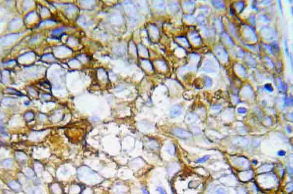
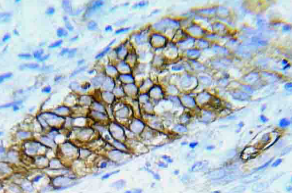
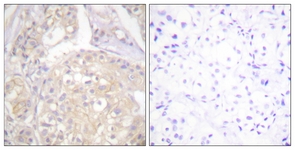
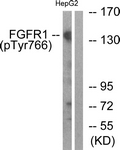


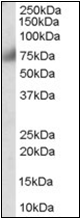
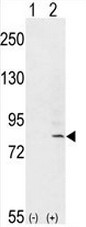
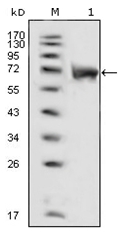


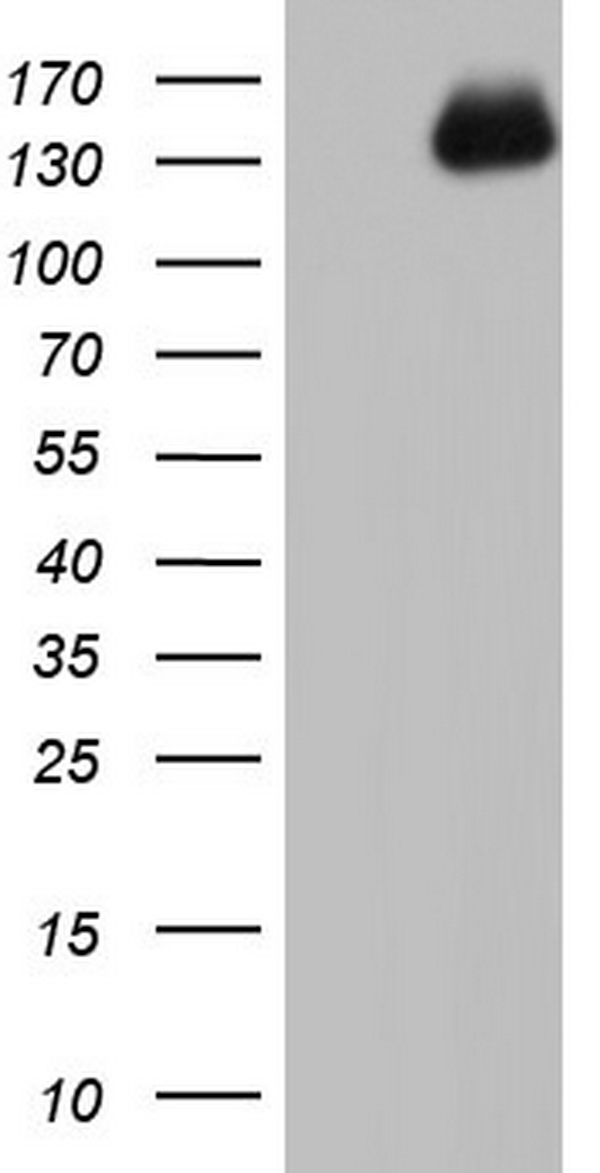
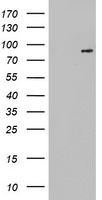
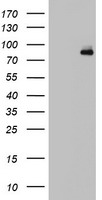
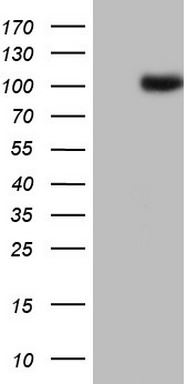
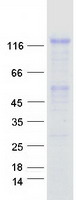







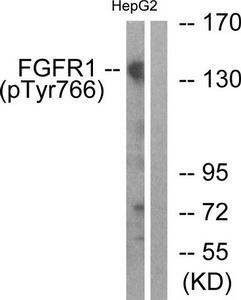
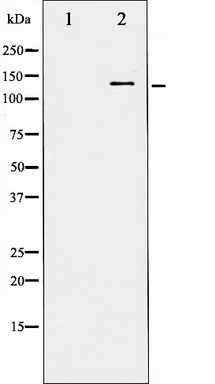
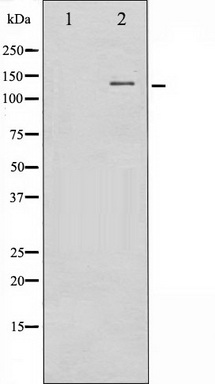
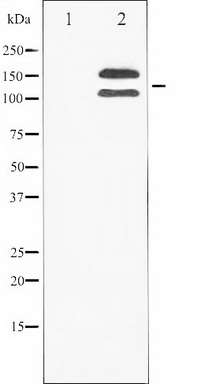
- Quick-Filters:
- Overnight Delivery (1)

Primary Antibodies
| Catalog No. | Host | Iso. | Clone | Pres. | React. | Applications | |
|---|---|---|---|---|---|---|---|
| TA302060 | FGFR1 antibody |
||||||
| Rabbit Polyclonal Antibody against FGFR1 (Y766) | |||||||
 |
Rabbit | Ig | Aff - Purified | Hu | WB |
0.4 ml /
€415.00
|
|
| OriGene Technologies, Inc. | |||||||
| TA302062 | FGFR1 antibody |
||||||
| Rabbit Polyclonal Antibody against FGFR1 (Y653) | |||||||
 |
Rabbit | Ig | Aff - Purified | Hu | WB |
0.4 ml /
€415.00
|
|
| OriGene Technologies, Inc. | |||||||
| TA302063 | FGFR1 antibody |
||||||
| Rabbit Polyclonal Antibody against FGFR1 (Y463) | |||||||
 |
Rabbit | Ig | Aff - Purified | Hu | WB |
0.4 ml /
€415.00
|
|
| OriGene Technologies, Inc. | |||||||
| TA309547 | FGFR1 antibody |
||||||
| Goat Polyclonal Antibody against FGFR1 | |||||||
 |
Goat | Aff - Purified | Bov, Can, Hu, Ms | E, WB |
0.1 mg /
€360.00
|
||
| OriGene Technologies, Inc. | |||||||
| TA312417 | FGFR1 antibody |
||||||
| Rabbit polyclonal FGFR1 (Ab-766) antibody | |||||||
 |
Rabbit | IgG | Purified | Hu, Ms, Rt | E, P, WB |
0.1 ml /
€335.00
|
|
| OriGene Technologies, Inc. | |||||||
 +1 additional image +1 additional image |
|||||||
| TA318605 | FGFR1 (beta isoform, N-term) antibody |
||||||
| Mouse Anti-Human FGFR1 Monoclonal Antibody | |||||||
 |
Mouse | IgG2b | M17A3 | Purified | Hu | IP, P, WB |
50 µg /
€475.00
|
| OriGene Technologies, Inc. | |||||||
| TA324059 | FGFR1 antibody |
||||||
| Anti-FGFR1 Rabbit Polyclonal Antibody | |||||||
 |
Rabbit | IgG | Purified | Hu, Ms, Rt | E, P |
0.1 ml /
€335.00
|
|
| OriGene Technologies, Inc. | |||||||
| +1 additional image |
|||||||
| TA325459 | FGFR1 antibody |
||||||
| Rabbit Polyclonal FGFR1 (Tyr154) Antibody (Phospho-specific) | |||||||
 |
Rabbit | IgG | Purified | Hu, Ms, Rt | WB |
0.1 ml /
€335.00
|
|
| OriGene Technologies, Inc. | |||||||
| TA325460 | FGFR1 antibody |
||||||
| Rabbit Polyclonal FGFR1 (Tyr654) Antibody (Phospho-specific) | |||||||
 |
Rabbit | IgG | Purified | Hu, Ms, Rt | WB |
0.1 ml /
€335.00
|
|
| OriGene Technologies, Inc. | |||||||
| TA325461 | FGFR1 antibody |
||||||
| Rabbit Polyclonal FGFR1 (Tyr766) Antibody (Phospho-specific) | |||||||
 |
Rabbit | IgG | Purified | Hu, Ms, Rt | WB |
0.1 ml /
€335.00
|
|
| OriGene Technologies, Inc. | |||||||
| TA326038 | FGFR1 antibody |
||||||
| Rabbit polyclonal FGFR1 (Phospho-Tyr766) antibody | |||||||
 |
Rabbit | IgG | Purified | Hu, Ms, Rt | WB |
0.1 ml /
€335.00
|
|
| OriGene Technologies, Inc. | |||||||
| TA326091 | FGFR1 antibody |
||||||
| Rabbit polyclonal FGFR1/2 (Ab-463) antibody | |||||||
 |
Rabbit | IgG | Purified | Hu, Ms, Rt | WB |
0.1 ml /
€335.00
|
|
| OriGene Technologies, Inc. | |||||||
| TA326184 | FGFR1 antibody |
||||||
| Rabbit polyclonal FGFR1/2 (Phospho-Tyr463/466) antibody | |||||||
 |
Rabbit | IgG | Purified | Hu, Ms | WB |
0.1 ml /
€335.00
|
|
| OriGene Technologies, Inc. | |||||||
| TA327256 | FGFR1 antibody |
||||||
| FGFR1 Rabbit Polyclonal Antibody | |||||||
 |
Rabbit | IgG | Purified | Hu, Ms, Rt |
0.1 mg /
€335.00
|
||
| OriGene Technologies, Inc. | |||||||
| +2 additional images |
|||||||
| TA327847 | FGFR1 antibody |
||||||
| Rabbit Polyclonal FGFR1 Antibody | |||||||
 |
Rabbit | IgG | Purified | Hu, Ms, Rt | WB |
0.1 ml /
€335.00
|
|
| OriGene Technologies, Inc. | |||||||
| TA802987 | FGFR1 antibody |
||||||
| FGFR1 mouse monoclonal antibody, clone OTI3C4 (formerly 3C4) | |||||||
 |
Mouse | IgG1 | OTI3C4 | Purified | Hu | WB |
0.1 ml /
€360.00
|
| OriGene Technologies, Inc. | |||||||
|
|||||||
| TA802989 | FGFR1 antibody |
||||||
| FGFR1 mouse monoclonal antibody, clone OTI6F8 (formerly 6F8) | |||||||
 |
Mouse | IgG2b | OTI6F8 | Purified | Hu | WB |
0.1 ml /
€360.00
|
| OriGene Technologies, Inc. | |||||||
|
|||||||
| TA802990 | FGFR1 antibody |
||||||
| FGFR1 mouse monoclonal antibody, clone OTI1A3 (formerly 1A3) | |||||||
 |
Mouse | IgG2b | OTI1A3 | Purified | Hu | WB |
0.1 ml /
€360.00
|
| OriGene Technologies, Inc. | |||||||
|
|||||||
| TA803096 | FGFR1 antibody |
||||||
| FGFR1 mouse monoclonal antibody, clone OTI5D5 (formerly 5D5) | |||||||
 |
Mouse | IgG1 | OTI5D5 | Purified | Hu | WB |
0.1 ml /
€360.00
|
| OriGene Technologies, Inc. | |||||||
|
|||||||
| AM06350SU-N | FGFR1 antibody |
||||||
 |
Mouse | IgG2b | 3D4F7 | Ascites | Hu | E, WB |
0.1 ml /
€380.00
|
| OriGene Technologies GmbH | |||||||