KCNG1 antibody
Principal name
KCNG1 antibody
Alternative names for KCNG1 antibody
Potassium voltage-gated channel subfamily G member 1, Voltage-gated potassium channel subunit Kv6.1
Ncbi ID
9606, NP_002228, NP_001074603.1, NP_002228.2, NM_001081134, NM_002237
Available reactivities
Available hosts
Available applications
Western blot / Immunoblot (WB), Enzyme Immunoassay (E), Paraffin Sections (P)
Background of KCNG1 antibody
Voltage-gated potassium (Kv) channels represent the most complex class of voltage-gated ion channels from both functional and structural standpoints. Their diverse functions include regulating neurotransmitter release, heart rate, insulin secretion, neuronal excitability, epithelial electrolyte transport, smooth muscle contraction, and cell volume. KCNG1 is a member of the potassium channel, voltage-gated, subfamily G. Voltage-gated potassium (Kv) channels represent the most complex class of voltage-gated ion channels from both functional and structural standpoints. Their diverse functions include regulating neurotransmitter release, heart rate, insulin secretion, neuronal excitability, epithelial electrolyte transport, smooth muscle contraction, and cell volume. This gene encodes a member of the potassium channel, voltage-gated, subfamily G. This gene is abundantly expressed in skeletal muscle. Alternative splicing results in at least two transcript variants encoding distinct isoforms. Voltage-gated potassium (Kv) channels represent the most complex class of voltage-gated ion channels from both functional and structural standpoints. Their diverse functions include regulating neurotransmitter release, heart rate, insulin secretion, neuronal excitability, epithelial electrolyte transport, smooth muscle contraction, and cell volume. This gene encodes a member of the potassium channel, voltage-gated, subfamily G. This gene is abundantly expressed in skeletal muscle. Multiple alternatively spliced transcript variants have been found in normal and cancerous tissues.
General readings
Su,K., et al., (1997) Biochem. Biophys. Res. Commun. 241 (3), 675-681
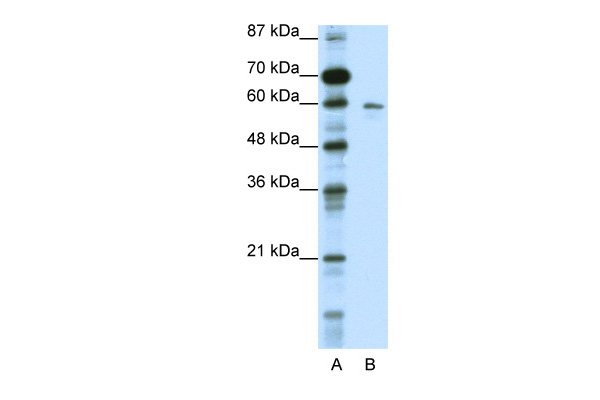
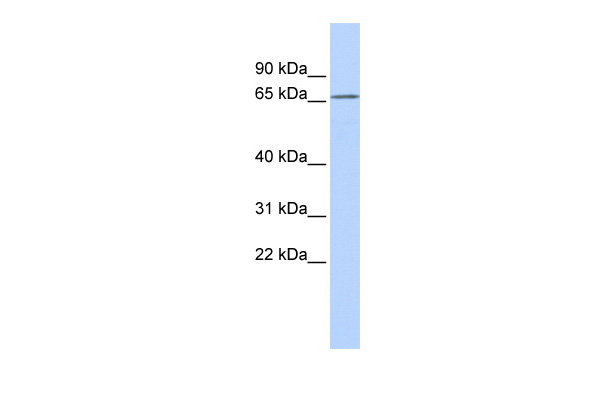
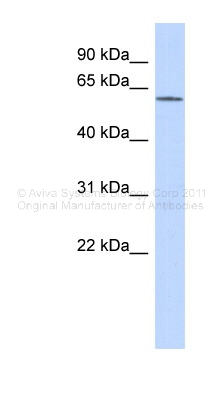
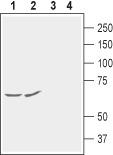

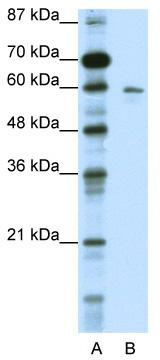
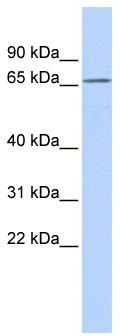

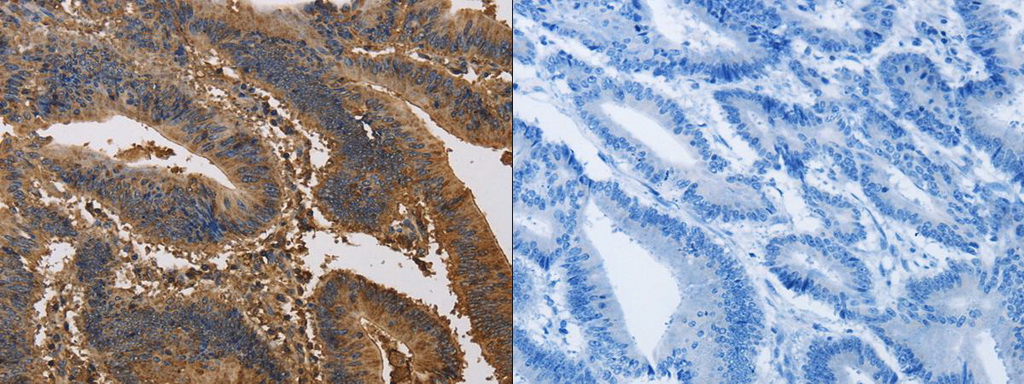
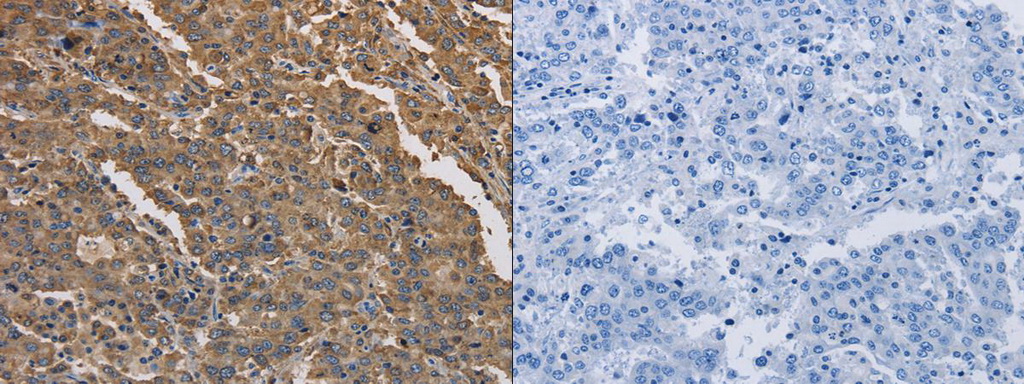
Primary Antibodies
| Catalog No. | Host | Iso. | Clone | Pres. | React. | Applications | |
|---|---|---|---|---|---|---|---|
| TA328985 | KCNG1 antibody |
||||||
| Rabbit polyclonal Anti-KV6.1 (extracellular) | |||||||
 |
Rabbit | Purified | Ms, Rt | WB |
0.2 ml /
€585.00
|
||
| OriGene Technologies, Inc. | |||||||
 +1 additional image +1 additional image |
|||||||
| TA351314 | KCNG1 antibody |
||||||
| Rabbit Polyclonal Anti-KCNG1 Antibody | |||||||
 |
Rabbit | IgG | Purified | Hu, Ms, Rt | E, P |
0.1 ml /
€335.00
|
|
| OriGene Technologies, Inc. | |||||||
| +1 additional image |
|||||||