KCTD14 antibody
Principal name
KCTD14 antibody
Alternative names for KCTD14 antibody
KCTD14, KCTD-14, BTB/POZ domain-containing protein KCTD14
SwissProt ID
Q9BQ13 (Human)
Gene ID
65987 (KCTD14)
Ncbi ID
Available reactivities
Available hosts
Available applications
Western blot / Immunoblot (WB), Flow Cytometry (F), Immunocytochemistry/Immunofluorescence (ICC/IF), Paraffin Sections (P)
Background of KCTD14 antibody
- Kit Component:
- - KN200745G1, KCTD14 gRNA vector 1 in pCas-Guide vector
- KN200745G2, KCTD14 gRNA vector 2 in pCas-Guide vector
- KN200745D, donor vector containing left and right homologous arms and Luciferase-Puro functional cassette
- GE100003, scramble sequence in pCas-Guide vector - CRISPR Manual:
- CRISPR/CAS9 Genome Editing Manual
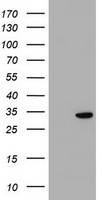
HEK293T cells were transfected with the pCMV6-ENTRY control (Left lane) or pCMV6-ENTRY KCTD14 (RC200745, Right lane) cDNA for 48 hrs and lysed. Equivalent amounts of cell lysates (5 ug per lane) were separated by SDS-PAGE and immunoblotted with anti-KCTD14.
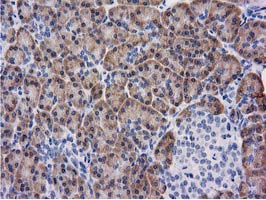
Immunohistochemical staining of paraffin-embedded Human pancreas tissue within the normal limits using anti-KCTD14 mouse monoclonal antibody. (Heat-induced epitope retrieval by 10mM citric buffer, pH6.0, 100C for 10min, TA502529)
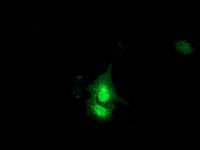
Anti-KCTD14 mouse monoclonal antibody (TA502529) immunofluorescent staining of COS7 cells transiently transfected by pCMV6-ENTRY KCTD14(RC200745).
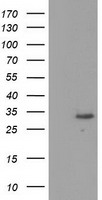
HEK293T cells were transfected with the pCMV6-ENTRY control (Left lane) or pCMV6-ENTRY KCTD14 (RC200745, Right lane) cDNA for 48 hrs and lysed. Equivalent amounts of cell lysates (5 ug per lane) were separated by SDS-PAGE and immunoblotted with anti-KCTD14.
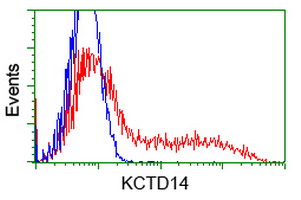
HEK293T cells transfected with either RC200745 overexpress plasmid(Red) or empty vector control plasmid(Blue) were immunostained by anti-KCTD14 antibody(TA502529), and then analyzed by flow cytometry.
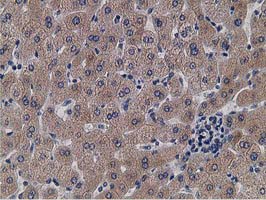
Immunohistochemical staining of paraffin-embedded Human liver tissue within the normal limits using anti-KCTD14 mouse monoclonal antibody. (Heat-induced epitope retrieval by 10mM citric buffer, pH6.0, 100C for 10min, TA502534)

Immunohistochemical staining of paraffin-embedded Human endometrium tissue within the normal limits using anti-KCTD14 mouse monoclonal antibody. (Heat-induced epitope retrieval by 10mM citric buffer, pH6.0, 100C for 10min, TA502534)
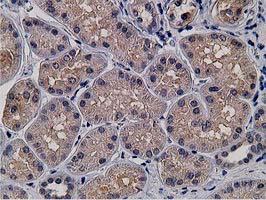
Immunohistochemical staining of paraffin-embedded Human Kidney tissue within the normal limits using anti-KCTD14 mouse monoclonal antibody. (Heat-induced epitope retrieval by 10mM citric buffer, pH6.0, 100C for 10min, TA502534)
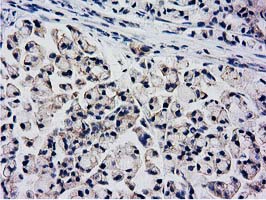
Immunohistochemical staining of paraffin-embedded Adenocarcinoma of Human colon tissue using anti-KCTD14 mouse monoclonal antibody. (Heat-induced epitope retrieval by 10mM citric buffer, pH6.0, 100C for 10min, TA502534)
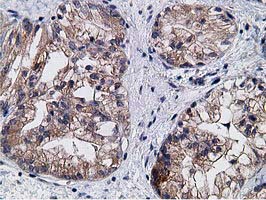
Immunohistochemical staining of paraffin-embedded Adenocarcinoma of Human ovary tissue using anti-KCTD14 mouse monoclonal antibody. (Heat-induced epitope retrieval by 10mM citric buffer, pH6.0, 100C for 10min, TA502534)

Immunohistochemical staining of paraffin-embedded Adenocarcinoma of Human breast tissue using anti-KCTD14 mouse monoclonal antibody. (Heat-induced epitope retrieval by 10mM citric buffer, pH6.0, 100C for 10min, TA502534)
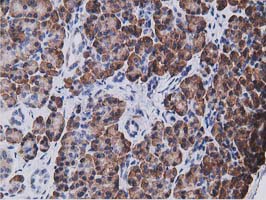
Immunohistochemical staining of paraffin-embedded Human pancreas tissue within the normal limits using anti-KCTD14 mouse monoclonal antibody. (Heat-induced epitope retrieval by 10mM citric buffer, pH6.0, 100C for 10min, TA502534)

Immunohistochemical staining of paraffin-embedded Human prostate tissue within the normal limits using anti-KCTD14 mouse monoclonal antibody. (Heat-induced epitope retrieval by 10mM citric buffer, pH6.0, 100C for 10min, TA502534)
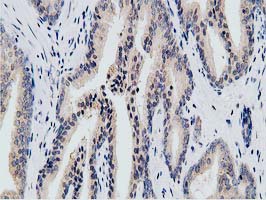
Immunohistochemical staining of paraffin-embedded Carcinoma of Human prostate tissue using anti-KCTD14 mouse monoclonal antibody. (Heat-induced epitope retrieval by 10mM citric buffer, pH6.0, 100C for 10min, TA502534)
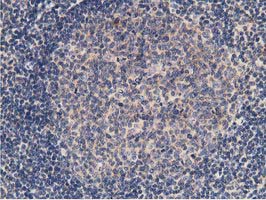
Immunohistochemical staining of paraffin-embedded Human lymph node tissue within the normal limits using anti-KCTD14 mouse monoclonal antibody. (Heat-induced epitope retrieval by 10mM citric buffer, pH6.0, 100C for 10min, TA502534)
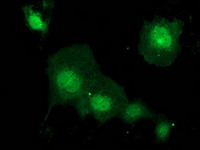
Anti-KCTD14 mouse monoclonal antibody (TA502534) immunofluorescent staining of COS7 cells transiently transfected by pCMV6-ENTRY KCTD14(RC200745).
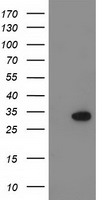
HEK293T cells were transfected with the pCMV6-ENTRY control (Left lane) or pCMV6-ENTRY KCTD14 (RC200745, Right lane) cDNA for 48 hrs and lysed. Equivalent amounts of cell lysates (5 ug per lane) were separated by SDS-PAGE and immunoblotted with anti-KCTD14.
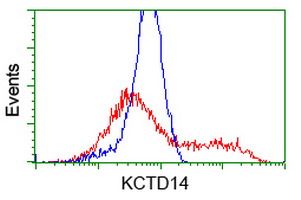
HEK293T cells transfected with either RC200745 overexpress plasmid(Red) or empty vector control plasmid(Blue) were immunostained by anti-KCTD14 antibody(TA502534), and then analyzed by flow cytometry.
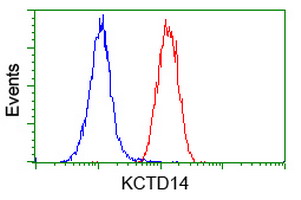
Flow cytometric Analysis of Hela cells, using anti-KCTD14 antibody(TA502534),(Red), compared to a nonspecific negative control antibody(TA50011),(Blue).
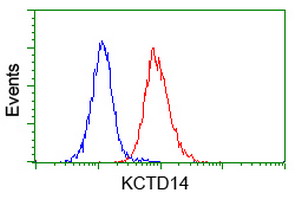
Flow cytometric Analysis of Jurkat cells, using anti-KCTD14 antibody(TA502534),(Red), compared to a nonspecific negative control antibody(TA50011),(Blue).

Anti-KCTD14 mouse monoclonal antibody (TA502636) immunofluorescent staining of COS7 cells transiently transfected by pCMV6-ENTRY KCTD14(RC200745 ).
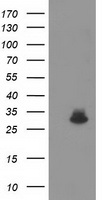
HEK293T cells were transfected with the pCMV6-ENTRY control (Left lane) or pCMV6-ENTRY KCTD14 (RC200745, Right lane) cDNA for 48 hrs and lysed. Equivalent amounts of cell lysates (5 ug per lane) were separated by SDS-PAGE and immunoblotted with anti-KCTD14.
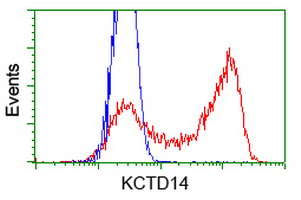
HEK293T cells transfected with either RC200745 overexpress plasmid(Red) or empty vector control plasmid(Blue) were immunostained by anti-KCTD14 antibody(TA502636), and then analyzed by flow cytometry.
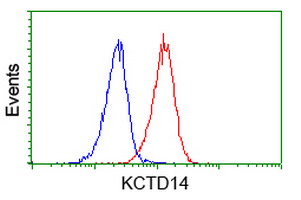
Flow cytometric Analysis of Jurkat cells, using anti-KCTD14 antibody(TA502636),(Red), compared to a nonspecific negative control antibody(TA50011),(Blue).
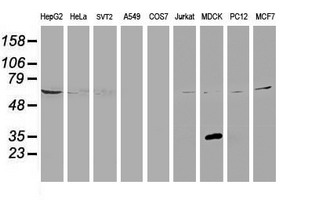
Western blot analysis of extracts (35ug) from 9 different cell lines by using anti-KCTD14 monoclonal antibody.
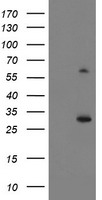
HEK293T cells were transfected with the pCMV6-ENTRY control (Left lane) or pCMV6-ENTRY KCTD14 (RC200745, Right lane) cDNA for 48 hrs and lysed. Equivalent amounts of cell lysates (5 ug per lane) were separated by SDS-PAGE and immunoblotted with anti-KCTD14.
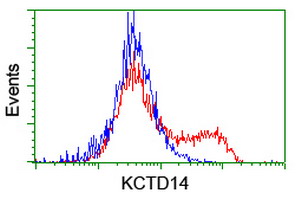
HEK293T cells transfected with either RC200745 overexpress plasmid(Red) or empty vector control plasmid(Blue) were immunostained by anti-KCTD14 antibody(TA502637), and then analyzed by flow cytometry.
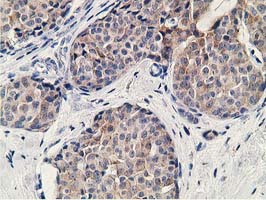
Immunohistochemical staining of paraffin-embedded Adenocarcinoma of Human breast tissue using anti-KCTD14 mouse monoclonal antibody. (Heat-induced epitope retrieval by 10mM citric buffer, pH6.0, 100C for 10min, TA502638)
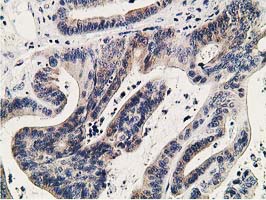
Immunohistochemical staining of paraffin-embedded Adenocarcinoma of Human colon tissue using anti-KCTD14 mouse monoclonal antibody. (Heat-induced epitope retrieval by 10mM citric buffer, pH6.0, 100C for 10min, TA502638)
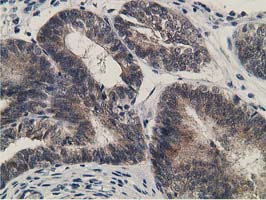
Immunohistochemical staining of paraffin-embedded Adenocarcinoma of Human endometrium tissue using anti-KCTD14 mouse monoclonal antibody. (Heat-induced epitope retrieval by 10mM citric buffer, pH6.0, 100C for 10min, TA502638)
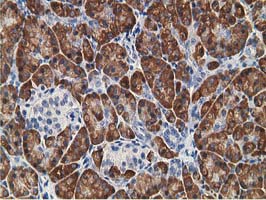
Immunohistochemical staining of paraffin-embedded Human pancreas tissue within the normal limits using anti-KCTD14 mouse monoclonal antibody. (Heat-induced epitope retrieval by 10mM citric buffer, pH6.0, 100C for 10min, TA502638)
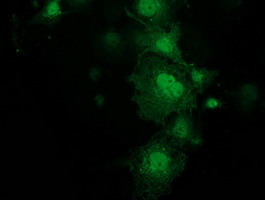
Anti-KCTD14 mouse monoclonal antibody (TA502638) immunofluorescent staining of COS7 cells transiently transfected by pCMV6-ENTRY KCTD14(RC200745).
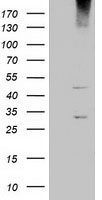
HEK293T cells were transfected with the pCMV6-ENTRY control (Left lane) or pCMV6-ENTRY KCTD14 (RC200745, Right lane) cDNA for 48 hrs and lysed. Equivalent amounts of cell lysates (5 ug per lane) were separated by SDS-PAGE and immunoblotted with anti-KCTD14.
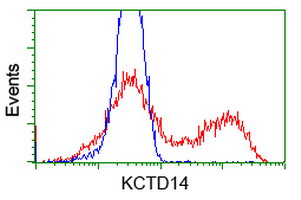
HEK293T cells transfected with either RC200745 overexpress plasmid(Red) or empty vector control plasmid(Blue) were immunostained by anti-KCTD14 antibody(TA502638), and then analyzed by flow cytometry.
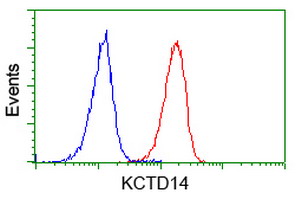
Flow cytometric Analysis of Jurkat cells, using anti-KCTD14 antibody(TA502638),(Red), compared to a nonspecific negative control antibody,(Blue).
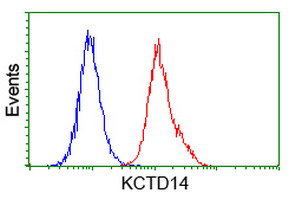
Flow cytometric Analysis of Hela cells, using anti-KCTD14 antibody(TA502638),(Red), compared to a nonspecific negative control antibody,(Blue).
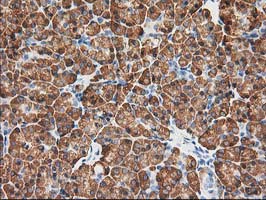
Immunohistochemical staining of paraffin-embedded Human pancreas tissue within the normal limits using anti-KCTD14 mouse monoclonal antibody. (Heat-induced epitope retrieval by 10mM citric buffer, pH6.0, 100C for 10min, TA502655)
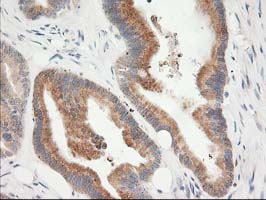
Immunohistochemical staining of paraffin-embedded Adenocarcinoma of Human colon tissue using anti-KCTD14 mouse monoclonal antibody. (Heat-induced epitope retrieval by 10mM citric buffer, pH6.0, 100C for 10min, TA502655)
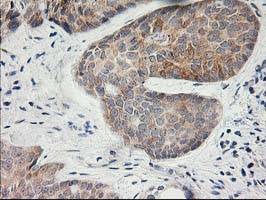
Immunohistochemical staining of paraffin-embedded Adenocarcinoma of Human breast tissue using anti-KCTD14 mouse monoclonal antibody. (Heat-induced epitope retrieval by 10mM citric buffer, pH6.0, 100C for 10min, TA502655)
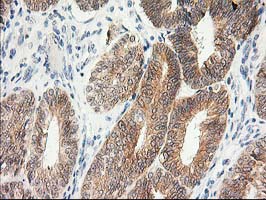
Immunohistochemical staining of paraffin-embedded Adenocarcinoma of Human endometrium tissue using anti-KCTD14 mouse monoclonal antibody. (Heat-induced epitope retrieval by 10mM citric buffer, pH6.0, 100C for 10min, TA502655)
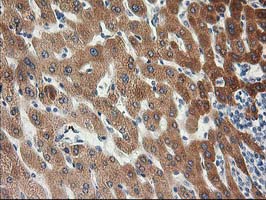
Immunohistochemical staining of paraffin-embedded Human liver tissue within the normal limits using anti-KCTD14 mouse monoclonal antibody. (Heat-induced epitope retrieval by 10mM citric buffer, pH6.0, 100C for 10min, TA502655)

Anti-KCTD14 mouse monoclonal antibody (TA502655) immunofluorescent staining of COS7 cells transiently transfected by pCMV6-ENTRY KCTD14(RC200745).
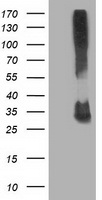
HEK293T cells were transfected with the pCMV6-ENTRY control (Left lane) or pCMV6-ENTRY KCTD14 (RC200745, Right lane) cDNA for 48 hrs and lysed. Equivalent amounts of cell lysates (5 ug per lane) were separated by SDS-PAGE and immunoblotted with anti-KCTD14.
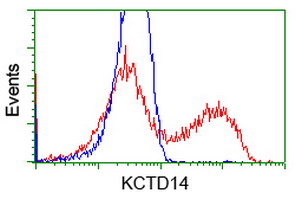
HEK293T cells transfected with either RC200745 overexpress plasmid(Red) or empty vector control plasmid(Blue) were immunostained by anti-KCTD14 antibody(TA502655), and then analyzed by flow cytometry.
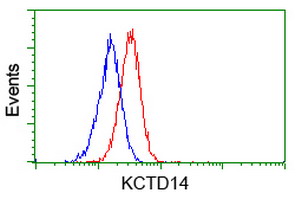
Flow cytometric Analysis of Jurkat cells, using anti-KCTD14 antibody(TA502655),(Red), compared to a nonspecific negative control antibody,(Blue).
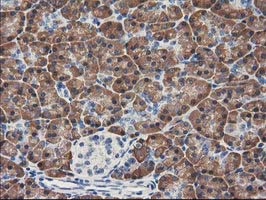
Immunohistochemical staining of paraffin-embedded Human pancreas tissue within the normal limits using anti-KCTD14 mouse monoclonal antibody. (Heat-induced epitope retrieval by 10mM citric buffer, pH6.0, 100C for 10min, TA502662)
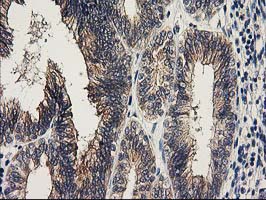
Immunohistochemical staining of paraffin-embedded Adenocarcinoma of Human endometrium tissue using anti-KCTD14 mouse monoclonal antibody. (Heat-induced epitope retrieval by 10mM citric buffer, pH6.0, 100C for 10min, TA502662)
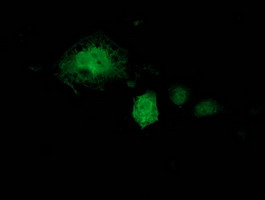
Anti-KCTD14 mouse monoclonal antibody (TA502662) immunofluorescent staining of COS7 cells transiently transfected by pCMV6-ENTRY KCTD14(RC200745).
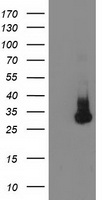
HEK293T cells were transfected with the pCMV6-ENTRY control (Left lane) or pCMV6-ENTRY KCTD14 (RC200745, Right lane) cDNA for 48 hrs and lysed. Equivalent amounts of cell lysates (5 ug per lane) were separated by SDS-PAGE and immunoblotted with anti-KCTD14.
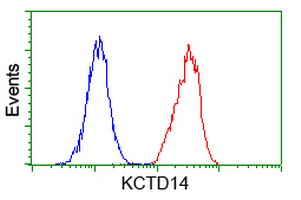
Flow cytometric Analysis of Jurkat cells, using anti-KCTD14 antibody(TA502662),(Red), compared to a nonspecific negative control antibody(TA50011),(Blue).
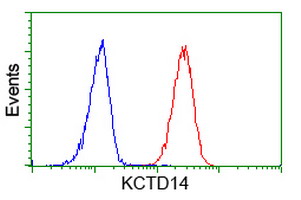
Flow cytometric Analysis of Hela cells, using anti-KCTD14 antibody(TA502662),(Red), compared to a nonspecific negative control antibody(TA50011),(Blue).
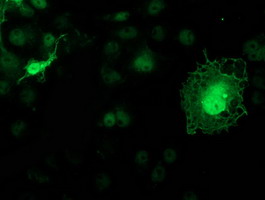
Anti-KCTD14 mouse monoclonal antibody (TA502687) immunofluorescent staining of COS7 cells transiently transfected by pCMV6-ENTRY KCTD14(RC200745 ).

HEK293T cells were transfected with the pCMV6-ENTRY control (Left lane) or pCMV6-ENTRY KCTD14 (RC200745, Right lane) cDNA for 48 hrs and lysed. Equivalent amounts of cell lysates (5 ug per lane) were separated by SDS-PAGE and immunoblotted with anti-KCTD14.

HEK293T cells transfected with either RC200745 overexpress plasmid(Red) or empty vector control plasmid(Blue) were immunostained by anti-KCTD14 antibody(TA502687), and then analyzed by flow cytometry.
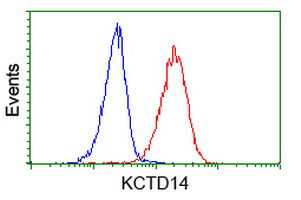
Flow cytometric Analysis of Jurkat cells, using anti-KCTD14 antibody(TA502687),(Red), compared to a nonspecific negative control antibody(TA50011),(Blue).
- Quick-Filters:
- Highly Validated (7)
Primary Antibodies
| Catalog No. | Host | Iso. | Clone | Pres. | React. | Applications | |
|---|---|---|---|---|---|---|---|
| TA502529 | KCTD14 antibody |
||||||
| KCTD14 mouse monoclonal antibody, clone OTI3A4 (formerly 3A4) | |||||||
 |
Mouse | IgG2a | OTI3A4 | Purified | Hu | F, ICC/IF, P, WB |
0.1 ml /
€360.00
|
| OriGene Technologies, Inc. | |||||||
 +3 additional images +3 additional images |
Highly validated antibody!
|
||||||
| TA502534 | KCTD14 antibody |
||||||
| KCTD14 mouse monoclonal antibody, clone OTI1D11 (formerly 1D11) | |||||||
 |
Mouse | IgG1 | OTI1D11 | Purified | Hu | F, ICC/IF, P, WB |
0.1 ml /
€379.00
|
| OriGene Technologies, Inc. | |||||||
| +14 additional images |
Highly validated antibody!
|
||||||
| TA502636 | KCTD14 antibody |
||||||
| KCTD14 mouse monoclonal antibody, clone OTI3F5 (formerly 3F5) | |||||||
 |
Mouse | IgG1 | OTI3F5 | Purified | Hu | F, ICC/IF, WB |
0.1 ml /
€360.00
|
| OriGene Technologies, Inc. | |||||||
| +3 additional images |
Highly validated antibody!
|
||||||
| TA502638 | KCTD14 antibody |
||||||
| KCTD14 mouse monoclonal antibody, clone OTI1D1 (formerly 1D1) | |||||||
 |
Mouse | IgG1 | OTI1D1 | Purified | Hu | F, ICC/IF, P, WB |
0.1 ml /
€360.00
|
| OriGene Technologies, Inc. | |||||||
| +8 additional images |
Highly validated antibody!
|
||||||
| TA502655 | KCTD14 antibody |
||||||
| KCTD14 mouse monoclonal antibody, clone OTI2A6 (formerly 2A6) | |||||||
 |
Mouse | IgG1 | OTI2A6 | Purified | Hu | F, ICC/IF, P, WB |
0.1 ml /
€360.00
|
| OriGene Technologies, Inc. | |||||||
| +8 additional images |
Highly validated antibody!
|
||||||
| TA502662 | KCTD14 antibody |
||||||
| KCTD14 mouse monoclonal antibody, clone OTI2B9 (formerly 2B9) | |||||||
 |
Mouse | IgG1 | OTI2B9 | Purified | Hu | F, ICC/IF, P, WB |
0.1 ml /
€360.00
|
| OriGene Technologies, Inc. | |||||||
| +5 additional images |
Highly validated antibody!
|
||||||
| TA502687 | KCTD14 antibody |
||||||
| KCTD14 mouse monoclonal antibody, clone OTI3C7 (formerly 3C7) | |||||||
 |
Mouse | IgG1 | OTI3C7 | Purified | Hu | F, ICC/IF, WB |
0.1 ml /
€360.00
|
| OriGene Technologies, Inc. | |||||||
| +3 additional images |
Highly validated antibody!
|
||||||
| TA502526 | KCTD14 antibody |
||||||
| KCTD14 mouse monoclonal antibody, clone OTI2E9 (formerly 2E9) | |||||||
 |
Mouse | IgG2a | OTI2E9 | Purified | Hu | WB |
0.1 ml /
€360.00
|
| OriGene Technologies, Inc. | |||||||
|
|||||||
| TA502637 | KCTD14 antibody |
||||||
| KCTD14 mouse monoclonal antibody, clone OTI1A11 (formerly 1A11) | |||||||
 |
Mouse | IgG1 | OTI1A11 | Purified | Can, Hu | F, WB |
0.1 ml /
€360.00
|
| OriGene Technologies, Inc. | |||||||
| +2 additional images |
|
||||||

Proteins & Growth Factors
| Catalog No. | Species | Pres. | Purity | Source | |
|---|---|---|---|---|---|
| TP300745 | KCTD14 |
||||
| Recombinant protein of human potassium channel tetramerisation domain containing 14 (KCTD14) | |||||
 |
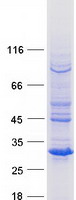
Human | > 80 % Preparation: Recombint protein was captured through anti-DDK affinity column followed by conventiol chromatography steps. Purity Detail: > 80% as determined by SDS-PAGE and Coomassie blue staining. |
HEK293 cells |
20 µg /
€748.00
|
|
| OriGene Technologies, Inc. | |||||
Lysates
| Catalog No. | ||
|---|---|---|
| LY411435 | KCTD14 overexpression lysate |
|
 |
0.1 mg /
€295.00
|
|
| OriGene Technologies, Inc. |