KIN antibody
Principal name
KIN antibody
Alternative names for KIN antibody
KIN, BTCD, KIN17, Binding to curved DNA, DNA/RNA-binding protein KIN17, KIN, antigenic determinant of recA protein homolog
Ncbi ID
Available reactivities
Available hosts
Available applications
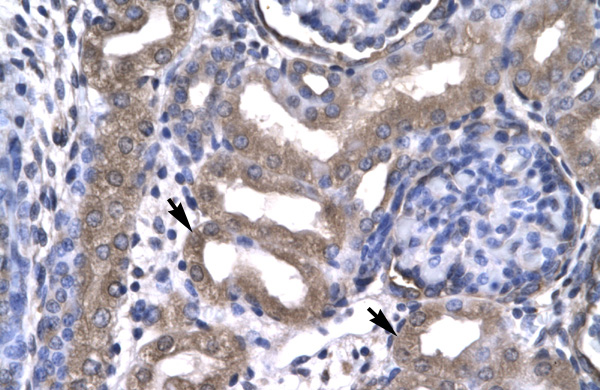
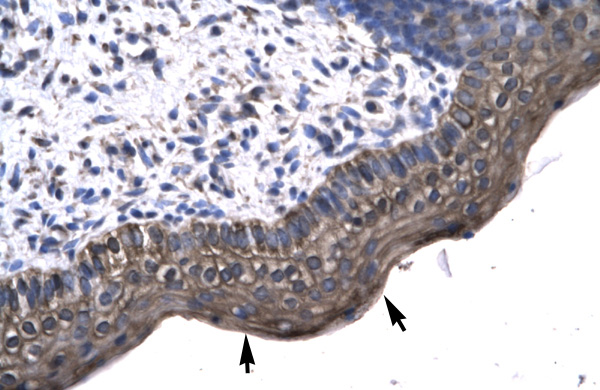
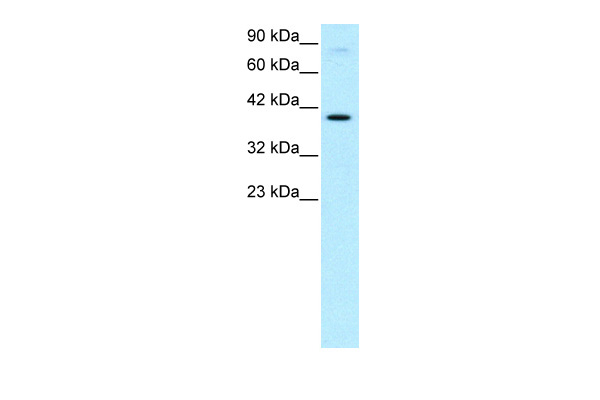
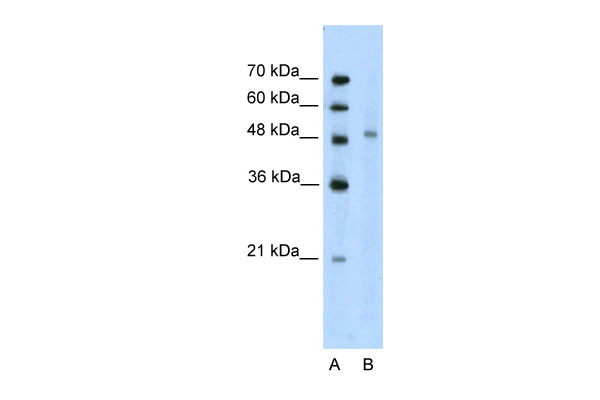
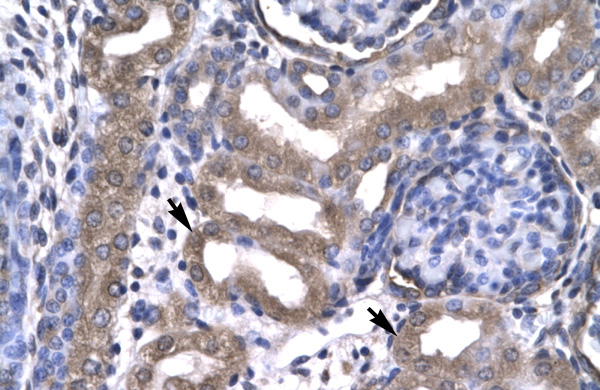
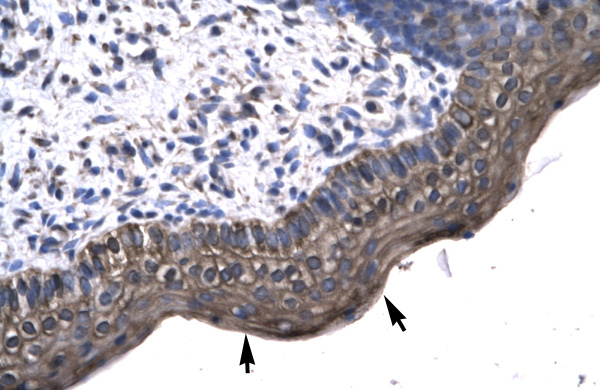
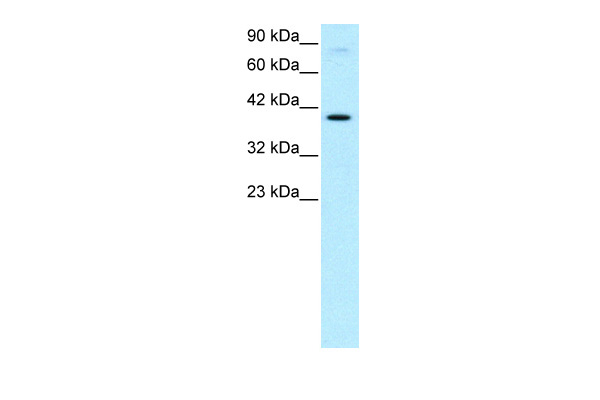
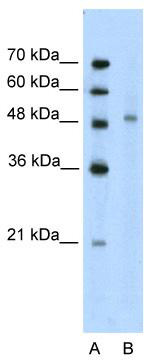
Western blot / Immunoblot (WB), Paraffin Sections (P)
Background of KIN antibody
Kin is a nuclear protein that forms intranuclear foci during proliferation and is redistributed in the nucleoplasm during the cell cycle. Short-wave ultraviolet light provokes the relocalization of the protein, suggesting its participation in the cellular response to DNA damage. Originally selected based on protein-binding with RecA antibodies, the mouse protein presents a limited similarity with a functional domain of the bacterial RecA protein, a characteristic shared by the human ortholog.The protein encoded by this gene is a nuclear protein that forms intranuclear foci during proliferation and is redistributed in the nucleoplasm during the cell cycle. Short-wave ultraviolet light provokes the relocalization of the protein, suggesting its participation in the cellular response to DNA damage. Originally selected based on protein-binding with RecA antibodies, the mouse protein presents a limited similarity with a functional domain of the bacterial RecA protein, a characteristic shared by this human ortholog.
General readings
"Differential expression of the HsKin17 protein during differentiation of in vitro reconstructed human skin."Biard D.S.F., Saintigny Y., Maratrat M., Vozenin M.-C., Martin M., Daburon F., Angulo J.F.Arch. Dermatol. Res. 289:448-456(1997)
"Human kin17 protein directly interacts with the simian virus 40 large T antigen and inhibits DNA replication." Miccoli L., Biard D.S.F., Creminon C., Angulo J.F. Cancer Res. 62:5425-5435(2002) "Selective interactions of human kin17 and RPA proteins with chromatin and the nuclear matrix in a DNA damage- and cell cycle-regulated manner." Miccoli L., Biard D.S.F., Frouin I., Harper F., Maga G., Angulo J.F. Nucleic Acids Res. 31:4162-4175(2003)
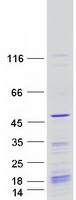
Proteins & Growth Factors
| Catalog No. | Species | Pres. | Purity | Source | |
|---|---|---|---|---|---|
| TP305689 | KIN |
||||
| Recombinant protein of human KIN, antigenic determinant of recA protein homolog (mouse) (KIN) | |||||
 |
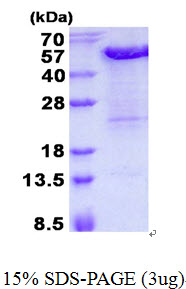
Human | > 80 % Preparation: Recombint protein was captured through anti-DDK affinity column followed by conventiol chromatography steps. Purity Detail: > 80% as determined by SDS-PAGE and Coomassie blue staining. |
HEK293 cells |
20 µg /
€748.00
|
|
| OriGene Technologies, Inc. | |||||
Lysates
| Catalog No. | ||
|---|---|---|
| LY402191 | KIN overexpression lysate |
|
 |
0.1 mg /
€295.00
|
|
| OriGene Technologies, Inc. |
Mouse Lenti ORF Particles
| Catalog No. | ||
|---|---|---|
| MR206100L2V | Lenti ORF particles, Kin (GFP-tagged) - Mouse antigenic determinant of rec-A protein (Kin), 200 uL, >10^7 TU/mL |
|
|
200 µl /
€930.00
|
|
| OriGene Technologies, Inc. | ||
| MR206100L1V | Lenti ORF particles, Kin (Myc-DDK-tagged) - Mouse antigenic determinant of rec-A protein (Kin), 200 uL, >10^7 TU/mL |
|
|
200 µl /
€830.00
|
|
| OriGene Technologies, Inc. | ||