LAT antibody
Principal name
LAT antibody
Alternative names for LAT antibody
pp36, p36-38, 36 kDa Phospho-Tyrosine Adapter Protein, Linker For Activation of T-Cells Family Member 1
Ncbi ID
NP_001014987.1, NP_001014987, 9606, 10116, NM_001014987, NP_034819.1, NM_010689, NM_014387, NM_001014988
Available reactivities
Available hosts
Available applications
Enzyme Immunoassay (E), Paraffin Sections (P), Western blot / Immunoblot (WB), Immunocytochemistry/Immunofluorescence (ICC/IF), Immunoprecipitation (IP), Flow Cytometry (F)
Background of LAT antibody
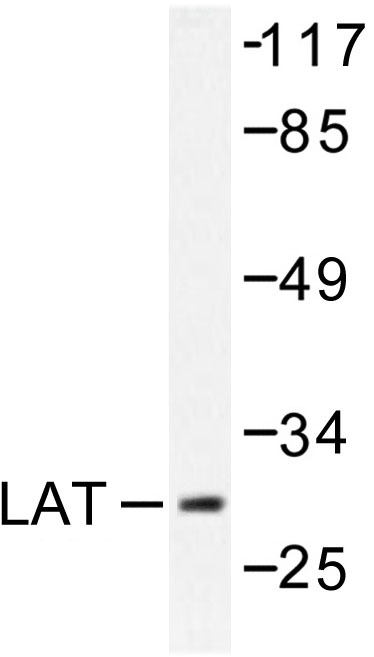
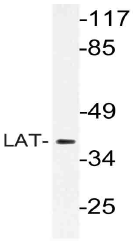
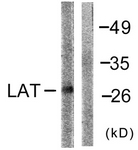
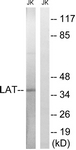
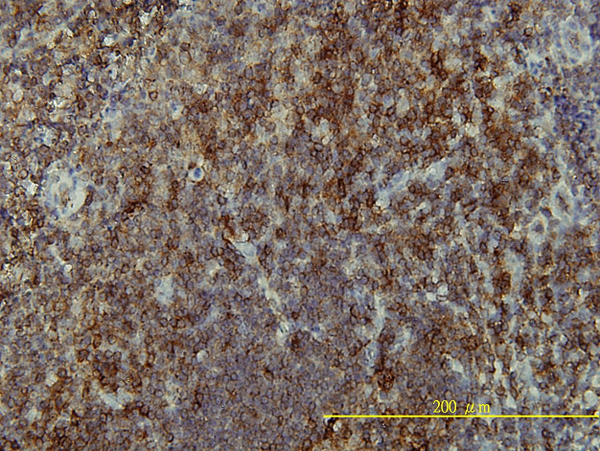
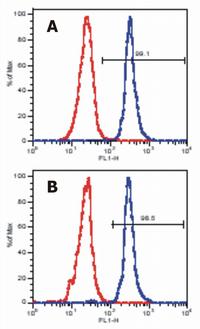
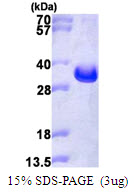
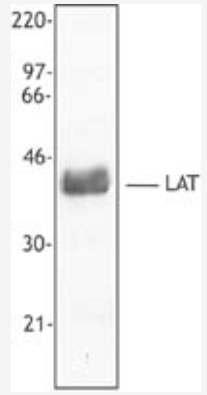
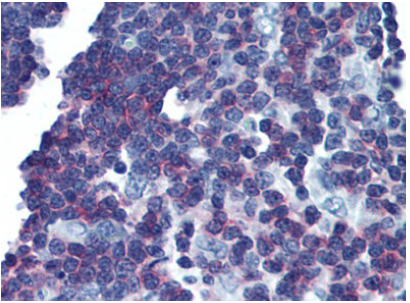
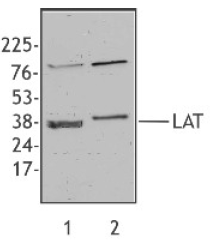
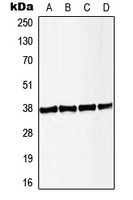
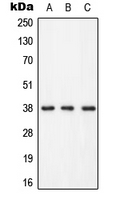
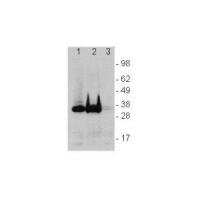
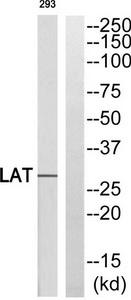
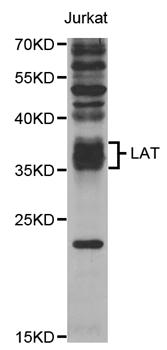
This LAT.10-17 (10-17) monoclol antibody reacts with human Linker for Activation of T cells (LAT), which is essential for T cell receptor (TCR)-mediated sigl transduction. Characterized as an integral transmembrane protein, this ~37-kDa molecule does not possess a true extracellular domain. Upon TCR/CD3 engagement, LAT localizes to lipid rafts and is tyrosine phosphorylated by ZAP-70, leading to the recruitment and activation of other downstream sigling molecules such as Grb-2, PLCγ, and PI3K. This adapter molecule has been shown to be required for T cell activation, as well as thymocyte and T regulatory cell development. In humans, LAT is expressed on peripheral blood lymphocytes, lymph nodes, and tonsil. Studies in mice have shown that LAT is expressed in thymocytes, T cells, mast cells, tural killer cells, megakaryocytes, platelets, and early B cells. This antibody does not crossreact with the mouse antigen.
General readings
Paz PE., et al. (2001) Biochem J. 356(2):461-71.Zhang W., et al. (1998) Cell. 92(1):83-92.





Primary Antibodies
| Catalog No. | Host | Iso. | Clone | Pres. | React. | Applications | |
|---|---|---|---|---|---|---|---|
| SM3119P | LAT antibody |
||||||
 |
Mouse | IgG1 | LAT-01 | Purified | Hu | F, IP, WB |
0.1 mg /
€240.00
|
| OriGene Technologies GmbH | |||||||

