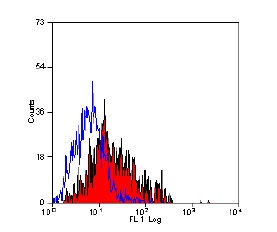
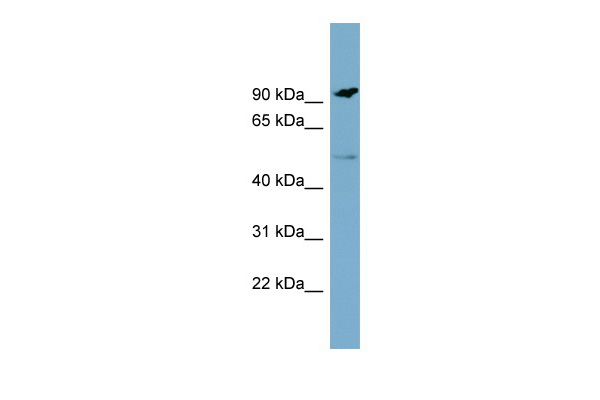
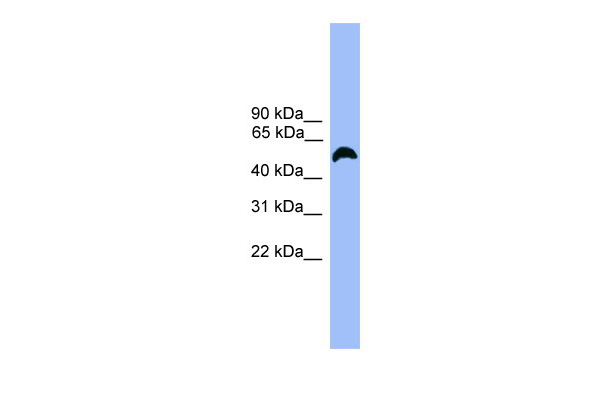
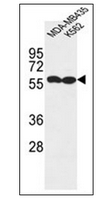
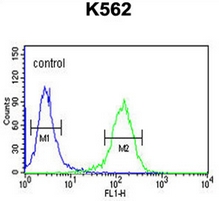
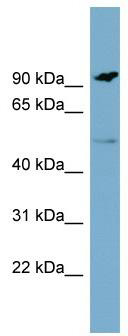
MARCO antibody
Principal name
MARCO antibody
Alternative names for MARCO antibody
macrophage receptor with collagenous structure, Scavenger Receptor
Ncbi ID
NP_034896.1, NP_006761, 9606, NP_006761.1, NM_010766, NM_006770
Available reactivities
Available hosts
Available applications
Flow Cytometry (F), Frozen Sections (C), Western blot / Immunoblot (WB), Paraffin Sections (P), Immunoprecipitation (IP), Immunocytochemistry/Immunofluorescence (ICC/IF), Functional assay (FN)
Background of MARCO antibody
The scavenger receptors (SRs) expressed by macrophages are thought to play an important role in the immune response against bacteria by mediating ligand binding and phagocytosis. SRs can be divided into three different classes based upon their structural properties, which are termed SR-A, SR-B and SR-C. SRs-A are homotrimeric glycoproteins composed of 77 kDa monomers subdivided into 3 types.. The molecular structure of MARCO resembles that of SR-A type I, containing a triple-helical collagenous domain and a scavenger receptor cysteine-rich (SRCR) domain at the C terminus. MARCO is only expressed in some subpopulations of macrophages, although it’s expression can be strongly upregulated during infection or LPS treatment. Furthermore, MARCO is, like sinusoidal endothelial cell markers DC-SIGNR, LYVE-1 and stabilin-2, expressed by sinusoidal endothelial cells in lymph node. MARCO expressed by alveolar macrophages seems to play an important role in response to inhaled particles and airborne pathogens.
General readings
Wright, A.K., et al. J. Leukoc. Biol. 86(3):479-489(2009)
Trynka, G., et al. Gut 58(8):1078-1083(2009)
Arredouani, M.S., et al. J. Immunol. 175(9):6058-6064(2005)
Liu, T., et al. J. Proteome Res. 4(6):2070-2080(2005)
Seta, N., et al. Arthritis Rheum. 44(4):931-939(2001)