NCOA1 antibody
Principal name
NCOA1 antibody
Alternative names for NCOA1 antibody
NCoA-1, Nuclear receptor coactivator 1, Steroid receptor coactivator 1, SRC-1, RIP160, Protein Hin-2, NY-REN-52, BHLHE74, Class E basic helix-loop-helix protein 74
Ncbi ID
9606, NP_003734.3, NP_671756, NP_003734, NM_003743, NM_147233, NP_035011.1, NM_147223
Available reactivities
Available hosts
Available applications
Enzyme Immunoassay (E), Western blot / Immunoblot (WB), Immunoprecipitation (IP), Paraffin Sections (P)
Background of NCOA1 antibody
There are three members of the steroid receptor co-activator (SRC) family of proteins: SRC-1 (NCoA-1), SRC-2 (TIF2/GRIP1/NCoA-2), and SRC-3 (ACTR/pCIP/RAC3/TRAM-1/AIB1). All SRC family members share significant structural homology and function to stimulate transcription mediated by nuclear hormone receptors and other transcriptiol activators such as Stat3, NF-?B, E2F1, and p53). Two SRC proteins, SRC-1 and SRC-3, function as histone acetyltransferases. In addition, all three family members can recruit other histone acetyltransferases (CBP/p300, PCAF) and histone methyltransferases (PRMT1, CARM1) to target promoters and cooperate to enhance expression of many genes. The SRC proteins play important roles in multiple physiological processes including cell proliferation, cell survival, somatic cell growth, mammary gland development, female reproductive function, and vasoprotection). SRC-1 and SRC-3 are conduits for kise-mediated growth factor sigling to the estrogen receptor and other transcriptiol activators. Seven SRC-1 phosphorylation sites and six SRC-3 phosphorylation sites have been identified, which are induced by steroids, cytokines, and growth factors and involve multiple kise sigling pathways). Research has shown that all three SRC family members are associated with increased activity of nuclear receptors in breast, prostate, and ovarian carcinomas. According to the literature, SRC-3 is frequently amplified or overexpressed in a number of cancers, and SRC-1/PAX3 and SRC-2/MYST3 translocations are found associated with rhabdomyosarcoma and acute myeloid leukemia, respectively.
General readings
Bailey, S.D., et al. Diabetes Care 33(10): 2250-2253 (2010)
Son, Y.L., et al. FEBS Lett. 584(18): 3862-3866 (2010)
McIlroy, M., et al. Cancer Res. 70(4): 1585-1594 (2010)
Hartmaier, R.J., et al. BMC Cancer 9: 438 (2009)
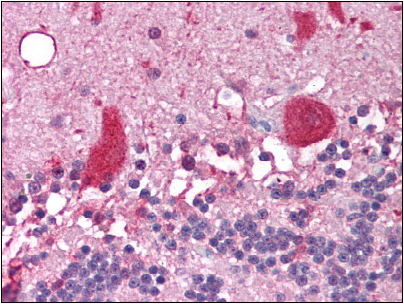
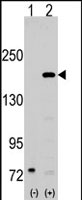
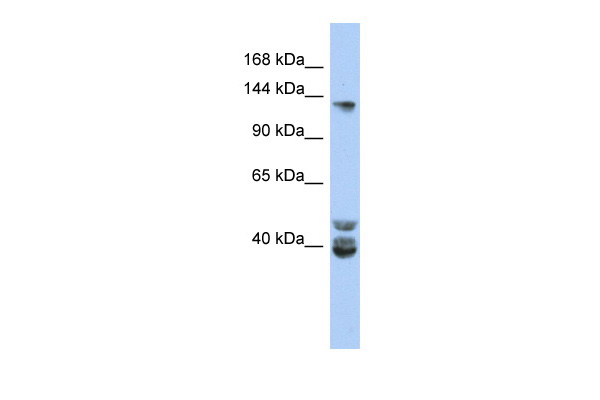


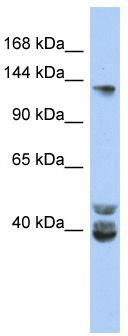
Primary Antibodies
| Catalog No. | Host | Iso. | Clone | Pres. | React. | Applications | |
|---|---|---|---|---|---|---|---|
| TA302235 | NCOA1 (N-term) antibody |
||||||
| Rabbit Polyclonal Antibody against NCOA1 (N-term) | |||||||
 |
Rabbit | Ig | Purified | Hu | WB |
0.4 ml /
€415.00
|
|
| OriGene Technologies, Inc. | |||||||
| TA321591 | NCOA1 antibody |
||||||
| Anti-NCOA1 Rabbit Polyclonal Antibody | |||||||
 |
Rabbit | IgG | Purified | Hu, Ms, Rt | WB |
0.1 ml /
€335.00
|
|
| OriGene Technologies, Inc. | |||||||
| AM06051PU-N | NCOA1 (477-947) antibody |
||||||
 |
Mouse | IgG1 | 1135 | Purified | Hu, Mky, Ms, Rt | IP, P, WB |
50 µl /
€425.00
|
| OriGene Technologies GmbH | |||||||
| AP54040PU-N | NCOA1 (Center) antibody |
||||||
 |
Rabbit | Ig | Purified | Hu | WB |
0.4 ml /
€415.00
|
|
| OriGene Technologies GmbH | |||||||
Lysates
| Catalog No. | ||
|---|---|---|
| LY401228 | NCOA1 overexpression lysate |
|
 |
0.1 mg /
€495.00
|
|
| OriGene Technologies, Inc. | ||
| LY407797 | NCOA1 overexpression lysate |
|
|
0.1 mg /
€495.00
|
|
| OriGene Technologies, Inc. | ||
| LY430181 | NCOA1 overexpression lysate |
|
|
0.1 mg /
€495.00
|
|
| OriGene Technologies, Inc. |