PCDHA4 antibody
Principal name
PCDHA4 antibody
Alternative names for PCDHA4 antibody
Protocadherin alpha-4, PCDH-alpha-4
Ncbi ID
9606, NP_061730, NP_113688, NP_061730.1, NM_007766, NM_053933, NM_031500, NM_018907, NP_001167625.1
Available reactivities
Available hosts
Available applications
Western blot / Immunoblot (WB), ELISA (detection) (E(detection))
Background of PCDHA4 antibody
The gene encoding PCDHA4 is a member of the protocadherin alpha gene cluster, one of three related gene clusters tandemly linked on chromosome five that demonstrate an unusual genomic organization similar to that of B-cell and T-cell receptor gene clusters. The alpha gene cluster is composed of 15 cadherin superfamily genes related to the mouse CNR genes and consists of 13 highly similar and 2 more distantly related coding sequences. PCDHA4 is a single-pass type I membrane protein. It contains 6 cadherin domains. PCDHA4 is a potential calcium-dependent cell-adhesion protein. It may be involved in the establishment and maintenance of specific neuronal connections in the brain.This gene is a member of the protocadherin alpha gene cluster, one of three related gene clusters tandemly linked on chromosome five that demonstrate an unusual genomic organization similar to that of B-cell and T-cell receptor gene clusters. The alpha gene cluster is composed of 15 cadherin superfamily genes related to the mouse CNR genes and consists of 13 highly similar and 2 more distantly related coding sequences. The tandem array of 15 N-terminal exons, or variable exons, are followed by downstream C-terminal exons, or constant exons, which are shared by all genes in the cluster. The large, uninterrupted N-terminal exons each encode six cadherin ectodomains while the C-terminal exons encode the cytoplasmic domain. These neural cadherin-like cell adhesion proteins are integral plasma membrane proteins that most likely play a critical role in the establishment and function of specific cell-cell connections in the brain. Alternative splicing has been observed and additional variants have been suggested but their full-length nature has yet to be determined. Polyclonal antibody produced in rabbits immunized with a synthetic peptide corresponding to a region of Human PCDHA4 with an internal ID of P27758
General readings
Stelzl,U., (2005) Cell 122 (6), 957-968

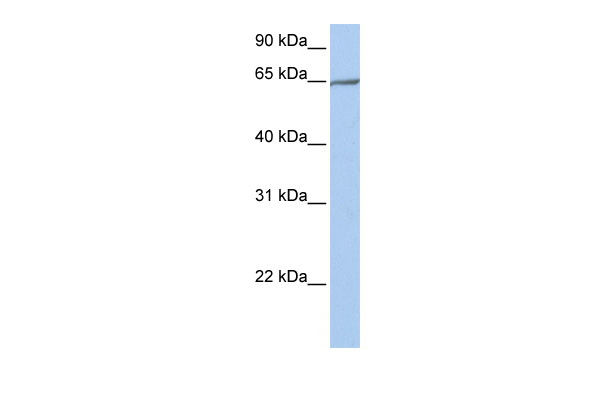
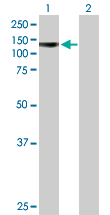

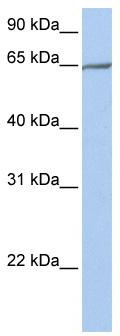
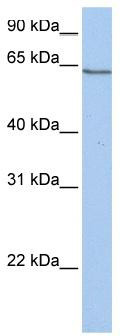
Primary Antibodies
| Catalog No. | Host | Iso. | Clone | Pres. | React. | Applications | |
|---|---|---|---|---|---|---|---|
| AP53198PU-N | PCDHA4 (C-term) antibody |
||||||
 |
Rabbit | Ig | Aff - Purified | Hu | WB |
0.4 ml /
€415.00
|
|
| OriGene Technologies GmbH | |||||||
Proteins & Growth Factors
| Catalog No. | Species | Pres. | Purity | Source | |
|---|---|---|---|---|---|
| TP311327 | PCDHA4 (transcript variant 2) |
||||
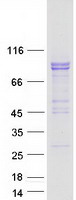
| Recombinant protein of human protocadherin alpha 4 (PCDHA4), transcript variant 2 | |||||
 |
Human | > 80 % Preparation: Recombint protein was captured through anti-DDK affinity column followed by conventiol chromatography steps. Purity Detail: > 80% as determined by SDS-PAGE and Coomassie blue staining. |
HEK293 cells |
20 µg /
€748.00
|
|
| OriGene Technologies, Inc. | |||||
Human Lenti ORF Particles
| Catalog No. | ||
|---|---|---|
| RC214854L2V | Lenti ORF particles, PCDHA4 (mGFP-tagged)-Human protocadherin alpha 4 (PCDHA4), transcript variant 1, 200 uL, >10^7 TU/mL |
|
 |
200 µl /
€2,080.00
|
|
| OriGene Technologies, Inc. | ||
Mouse Lenti ORF Particles
| Catalog No. | ||
|---|---|---|
| MR226662L2V | Lenti ORF particles, Pcdha4 (GFP-tagged) - Mouse protocadherin alpha 4 (Pcdha4), 200 uL, >10^7 TU/mL |
|
|
200 µl /
€1,810.00
|
|
| OriGene Technologies, Inc. | ||
Rat Lenti ORF Particles
| Catalog No. | ||
|---|---|---|
| RR212340L2V | Lenti ORF particles, Pcdha4 (GFP-tagged ORF) - Rat protocadherin alpha 4 (Pcdha4), 200 uL, >10^7 TU/mL |
|
|
200 µl /
€1,810.00
|
|
| OriGene Technologies, Inc. | ||
| RR212340L1V | Lenti ORF particles, Pcdha4 (Myc-DDK-tagged ORF) - Rat protocadherin alpha 4 (Pcdha4), 200 uL, >10^7 TU/mL |
|
|
200 µl /
€1,630.00
|
|
| OriGene Technologies, Inc. | ||

