PKD2 antibody
Principal name
PKD2 antibody
Alternative names for PKD2 antibody
Polycystin-2, Polycystwin, R48321, Autosomal dominant polycystic kidney disease type II protein, Polycystic kidney disease 2 protein
Gene ID
5311 (PKD2)
Ncbi ID
Available reactivities
Available hosts
Available applications
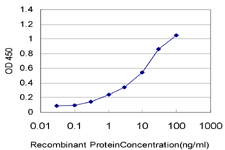
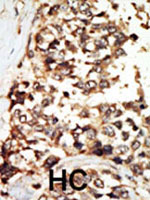
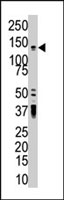
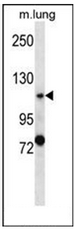
Enzyme Immunoassay (E), Western blot / Immunoblot (WB), Paraffin Sections (P)
Background of PKD2 antibody
Transient receptor potential (TRP) channels are relatively non-selective ion channels ebling the exchange of cations down their electrochemical gradient. This exchange ebles the intracellular rise in + and Ca2+ concentration and ultimately in the cell membrane depolarization, important for action potential propagation and muscle contraction. They are activated by an extremely broad range of stimuli mely, temperature, voltage, pH, endocrine factors as well as sigling molecules. The TRP channel family is composed of 28 members divided in 7 subgroups: TRPV, TRPC, TRPM, TRPA, TRPN, TRPP and TRPML. All members of the TRP family have 6 transmembrane (TM) domains, and a pore domain between the fifth (S5) and sixth (S6) transmembrane domains. In general, TRP channels eble the passage of either + or Ca2+ ions with little or no preference. However, some channels do exhibit some selectivity. Also, TRP channels do not display the positive charges in the S4 voltage-sensing domain like most voltage sensitive channels, although they do display voltage dependency. In addition, TRP channels have in the C-termil intracellular region to the S6 domain a TRP domain comprising 25 amino acids that is more or less conserved among most TRP channels. Within the TRP domain, there is a TRP box composed of six amino acids, and TRP box 2 – a proline rich domain. The TRP domain seems to be responsible for the binding of PIP2, a phospholipid important for the regulation of channel activity. TRPP1 (polycystin-2, PC2, PKD2) belongs to the TRPP subfamily of TRP channels along with TRPP3 and TRPP5 proteins, and forms non-selective cation channels with different permeability to various divalent cations. The cellular localization of TRPP1 has been and still is the subject of a lasting debate. In many cell-types, TRPP1 is retained in the endoplasmic reticulum (ER) where it most likely functions as Ca2+ release channel, and with the help of cofactors, TRPP2 reaches the plasma membrane and the cilia. TRPP1 expression is widespread and is best characterized for its expression in the kidney where it is developmentally regulated. In the kidney, it associates with PKD1 (TRPP2) an eleven transmembrane-spanning protein (which does not belong to the TRP superfamily) to form functiol channels. In addition, TRPP1 is identified as one of the genes responsible for autosomal domint polycystic kidney disease (ADPKD).
General readings
Duning, K., et al. J. Biol. Chem. 285(44):33584-33588(2010)
Bailey, S.D., et al. Diabetes Care 33(10):2250-2253(2010)
Stewart, A.P., et al. Biophys. J. 99(3):790-797(2010)
Petri, E.T., et al. Proc. Natl. Acad. Sci. U.S.A. 107(20):9176-9181(2010)
Steiner, T.S., et al. Cell. Immunol. 264(2):135-142(2010)
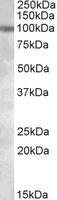
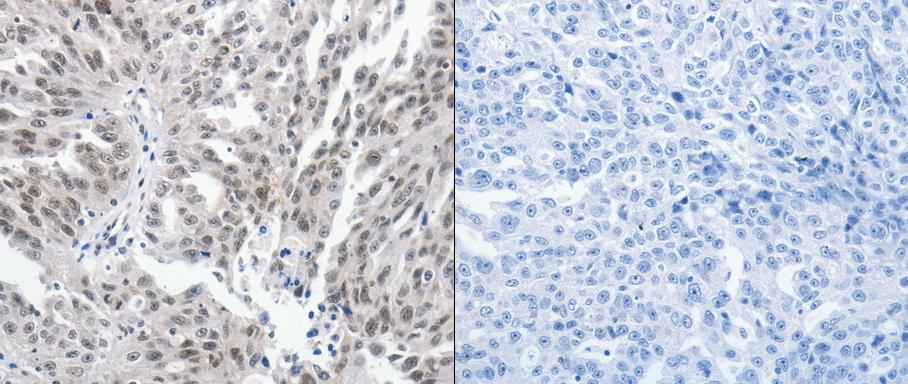
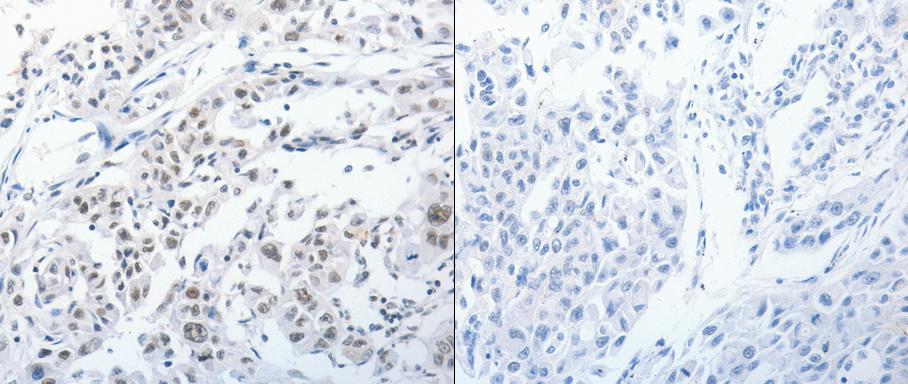

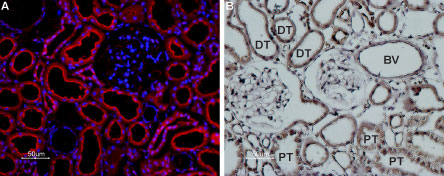
Primary Antibodies
| Catalog No. | Host | Iso. | Clone | Pres. | React. | Applications | |
|---|---|---|---|---|---|---|---|
| TA305931 | PKD2 antibody |
||||||
| Goat Anti-Polycystin 2 / PKD2 Antibody | |||||||
 |
Goat | Aff - Purified | Bov, Hu, Ms, Rt | E, WB |
0.1 mg /
€360.00
|
||
| OriGene Technologies, Inc. | |||||||
| TA323703 | PKD2 antibody |
||||||
| Anti-PKD2 Rabbit Polyclonal Antibody | |||||||
 |
Rabbit | IgG | Purified | Hu, Ms, Rt | E, P |
0.1 ml /
€335.00
|
|
| OriGene Technologies, Inc. | |||||||
 +1 additional image +1 additional image |
|||||||
| TA328750 | PKD2 antibody |
||||||
| Rabbit Polyclonal Anti-TRPP1 (PKD2) | |||||||
 |
Rabbit | Purified | Hu, Ms, Rt | WB |
0.2 ml /
€585.00
|
||
| OriGene Technologies, Inc. | |||||||
| +2 additional images |
|||||||
| AP53314PU-N | PKD2 (C-term) antibody |
||||||
 |
Rabbit | Ig | Aff - Purified | Hu, Ms | WB |
0.4 ml /
€415.00
|
|
| OriGene Technologies GmbH | |||||||

