RAD9A antibody
Principal name
RAD9A antibody
Alternative names for RAD9A antibody
RAD-9A, Cell cycle checkpoint control protein RAD9A, EC=3.1.11.2, DNA repair exonuclease rad9 homolog A
Ncbi ID
Available reactivities
Available hosts
Available applications
Immunocytochemistry/Immunofluorescence (ICC/IF), Western blot / Immunoblot (WB), Enzyme Immunoassay (E), Frozen Sections (C), Immunoprecipitation (IP), Paraffin Sections (P), Flow Cytometry (F)
Background of RAD9A antibody
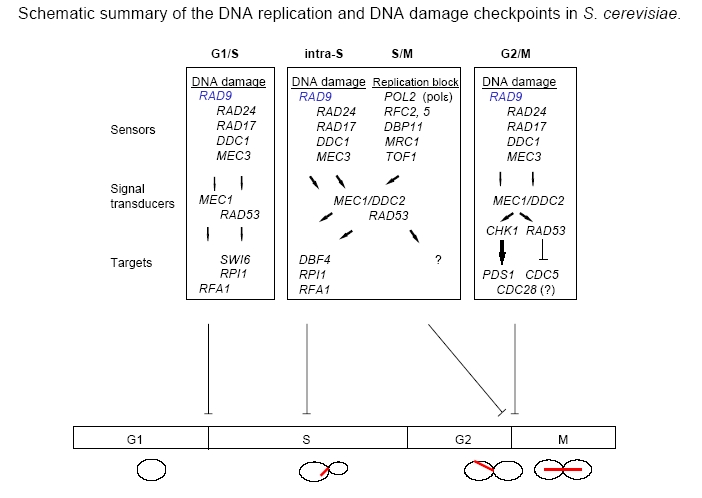
Cells respond to DNA damage by activating a network of signaling pathways that control cell cycle progression and DNA repair. Cell cycle checkpoints are mechanisms that transiently delay cell cycle progression when DNA is damaged or DNA replication is incomplete. In the fission yeast Schizosaccharomyces pombe, a group of six such checkpoint control genes have been identified and include rad1+, rad3+, rad9+, rad17+, rad26+ and hus1+. Mutations in any one of these genes render cells sensitive to gamma-rays, UV light or the DNA synthesis inhibitor hydroxyurea (HU) and eliminate the ability of cells to delay entry into mitosis after treatment with these agents. All of these genes apparently link abnormal DNA structures to cell cycle control. As for cell cycle-related genes in general, these checkpoint control genes are highly conserved throughout evolution. Human and mouse versions of several of the S.pombe genes have been isolated, providing strong evidence that checkpoint control mechanisms are also highly conserved. In mammals, these genes are thought to maintain genomic stability, especially in the presence of DNA damage. Therefore, when these genes are altered, genomic instability may occur and lead to cancer. The biochemical activities of most of the checkpoint control gene products are not well established, although progress has been made towards learning more about their function. For example, examination of the structure of the protein encoded by human or S.pombe rad9 reveals a BH3-like domain in the N-terminal region that can bind the anti-apoptotic proteins Bcl-2 and Bcl-XL. Furthermore, overexpression of the gene from either organism in human cells can cause apoptosis in a BH3 domain-dependent manner. Both S.pombe and human versions of the protein can bind two other checkpoint control proteins, Hus1p (HUS1p) and Rad1p (RAD1p). Human RAD9 protein binds HUS1 and RAD1 proteins at its C-terminal region, suggesting that RAD9 has at least two functional domains, one involved in apoptosis and the other in cell cycle checkpoint control. Rad9 conveys the checkpoint signal by activating Rad53p and Chk1p; is hyperphosphorylated by Mec1p and Tel1p; and is a potential Cdc28p substrate.
General readings
This product has been used in:Komatsu K et al. PCNA interacts with hHus1/hRad9 in response to DNA damage and replication inhibition. Oncogene 19:5291-7 (2000). PubMed PMID: 11077446
General / background references:Brondello JM et al. Basis for the checkpoint signal specificity that regulates Chk1 and Cds1 protein kinases. Mol Cell Biol 19:4262-9 (1999). PubMed PMID: 10330167
Russell P Checkpoints on the road to mitosis. Trends Biochem Sci 23:399-402 (1998). PubMed PMID: 9810229
Lieberman HB et al. A human homolog of the Schizosaccharomyces pombe rad9+ checkpoint control gene. Proc Natl Acad Sci U S A 93:13890-5 (1996). PubMed PMID: 8943031
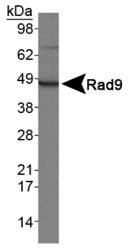
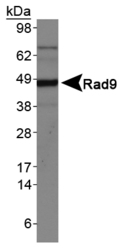
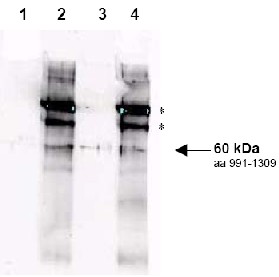

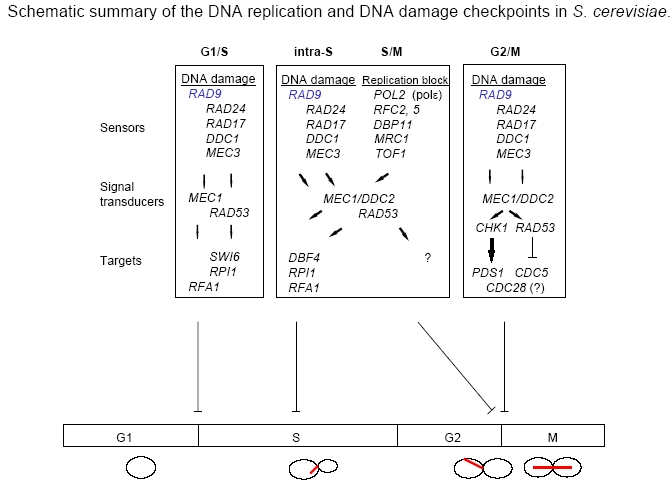

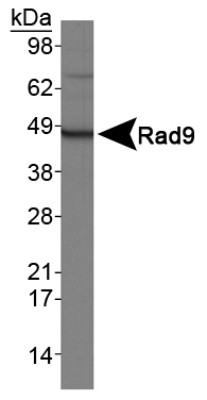
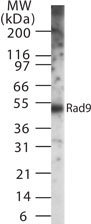
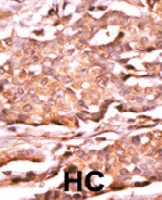

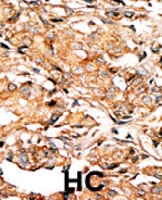

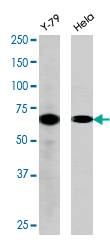
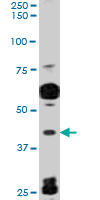
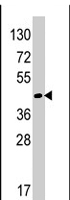
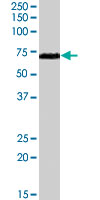
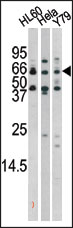
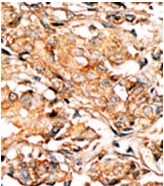
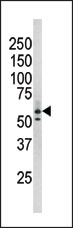
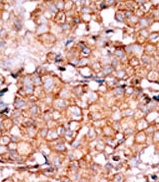



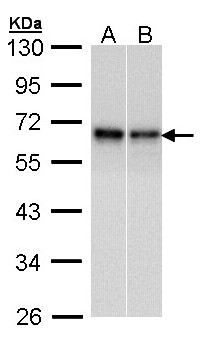


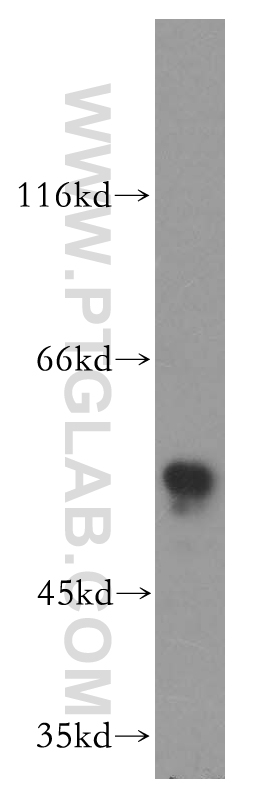
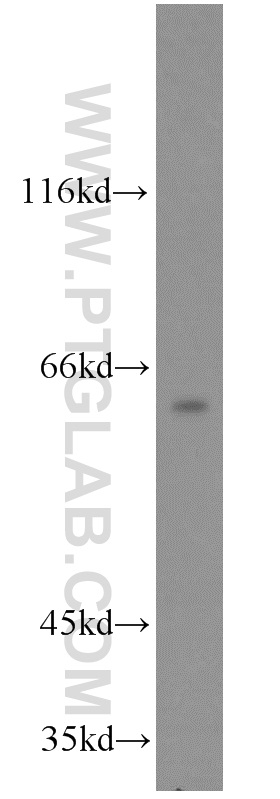
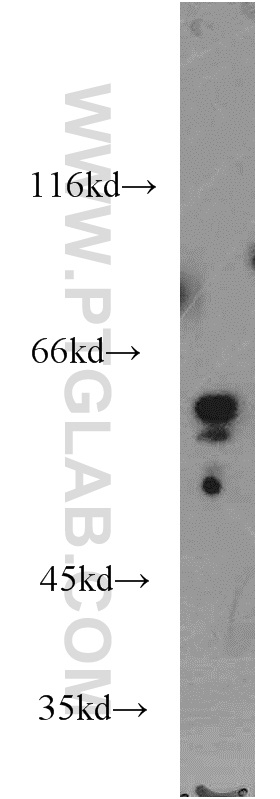
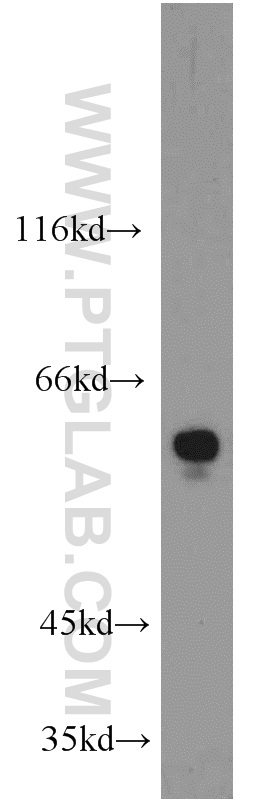
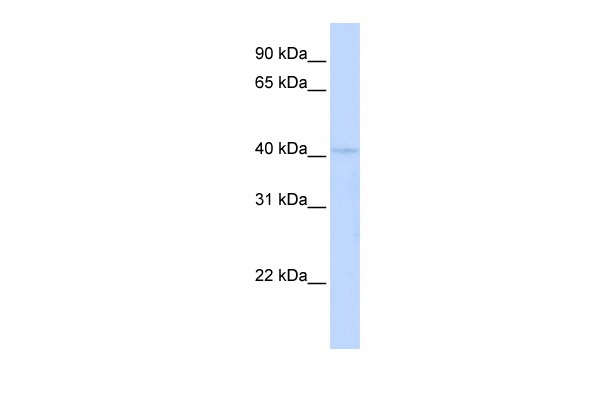
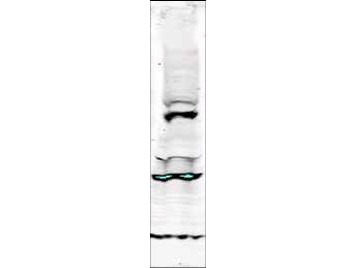

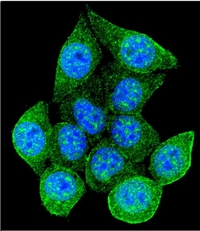
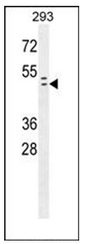
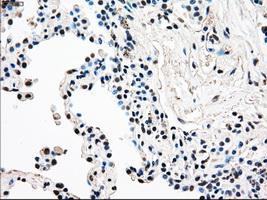
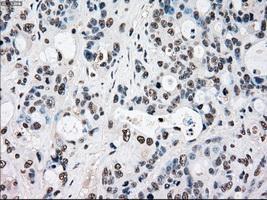
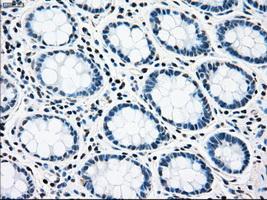

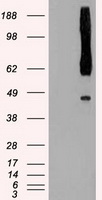
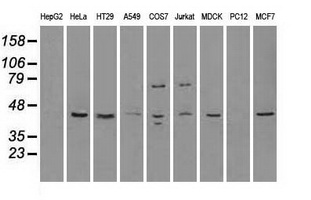
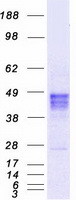
- Quick-Filters:
- Highly Validated (3)

Primary Antibodies
| Catalog No. | Host | Iso. | Clone | Pres. | React. | Applications | |
|---|---|---|---|---|---|---|---|
| TA308749 | RAD9A antibody |
||||||
| Rabbit polyclonal antibody to Rad9 (RAD9 homolog A (S. pombe)) | |||||||
 |
Rabbit | IgG | Aff - Purified | Hu, Ms, Rt | ICC/IF, P, WB |
0.1 ml /
€415.00
|
|
| OriGene Technologies, Inc. | |||||||
 +4 additional images +4 additional images |
Highly validated antibody! |
||||||
| TA500434 | RAD9A antibody |
||||||
| anti-RAD9A (RAD9) mouse monoclonal antibody, clone OTI7B11 (formerly 7B11) | |||||||
 |
Mouse | IgG2a | OTI7B11 | Purified | Hu | P, WB |
0.1 ml /
€360.00
|
| OriGene Technologies, Inc. | |||||||
| +6 additional images |
Highly validated antibody!
|
||||||
| TA500435 | RAD9A antibody |
||||||
| anti-RAD9A (RAD9) mouse monoclonal antibody, clone OTI5D9 (formerly 5D9) | |||||||
 |
Mouse | IgG2a | OTI5D9 | Purified | Can, Hu, Mky | P, WB |
0.1 ml /
€379.00
|
| OriGene Technologies, Inc. | |||||||
| +3 additional images |
Highly validated antibody!
|
||||||
| TA301769 | RAD9A antibody |
||||||
| Rabbit Polyclonal Antibody against RAD9 | |||||||
 |
Rabbit | IgG | Purified | Hu | C, WB |
50 µl /
€395.00
|
|
| OriGene Technologies, Inc. | |||||||
| TA302093 | RAD9A (BH3 Domain) antibody |
||||||
| Rabbit Polyclonal Antibody against RAD9A | |||||||
 |
Rabbit | Ig | Purified | Hu, Ms | P, WB |
0.4 ml /
€415.00
|
|
| OriGene Technologies, Inc. | |||||||
| +2 additional images |
|||||||
| TA302588 | RAD9A (C-term) antibody |
||||||
| Goat Polyclonal Antibody against RAD9A | |||||||
 |
Goat | Aff - Purified | Can, Hu, Ms | E, WB |
0.1 mg /
€360.00
|
||
| OriGene Technologies, Inc. | |||||||
| TA324191 | RAD9A antibody |
||||||
| Anti-RAD9A Rabbit Polyclonal Antibody | |||||||
 |
Rabbit | IgG | Purified | Hu, Ms, Rt | WB |
0.1 ml /
€335.00
|
|
| OriGene Technologies, Inc. | |||||||
| TA336578 | RAD9A antibody |
||||||
| Mouse Monoclonal Rad9 Antibody (93A535) | |||||||
![Western Blot: Rad9 Antibody (93A535) [TA336578] - Western blot analysis of RAD9 recombinant protein using RAD9 antibody at 2 ug/ml. Human tissue TMA was used for this test.](https://m1.acris-antibodies.com/catalog/product/cache/1/small_image/50x50/9df78eab33525d08d6e5fb8d27136e95/OriGene/NB120-13600-1-W.jpg) |
Mouse | IgG1 | 93A535 | Purified | Hu | C, ICC/IF, IP, P, WB |
0.1 mg /
€395.00
|
| OriGene Technologies, Inc. | |||||||
| +1 additional image |
|||||||
| TA347038 | RAD9A antibody |
||||||
| Mouse Monoclonal RAD9A Antibody | |||||||
 |
Mouse | IgG2b | 3A3-A7-F8 | Purified | WB |
0.1 ml /
€335.00
|
|
| OriGene Technologies, Inc. | |||||||
| +1 additional image |
|||||||
| AP05666PU-N | RAD9A antibody |
||||||
 |
Rabbit | IgG | Purified | Ye | E, WB |
50 µg /
€410.00
|
|
| OriGene Technologies GmbH | |||||||
| AP12684PU-N | RAD9A pSer272 antibody |
||||||
 |
Rabbit | Ig | Aff - Purified | Hu | P, WB |
0.4 ml /
€415.00
|
|
| OriGene Technologies GmbH | |||||||
| +1 additional image |
|||||||
| AP12685PU-N | RAD9A pSer277 antibody |
||||||
 |
Rabbit | Ig | Aff - Purified | Hu | P, WB |
0.4 ml /
€415.00
|
|
| OriGene Technologies GmbH | |||||||
| +1 additional image |
|||||||
| AP12686PU-N | RAD9A pSer328 antibody |
||||||
 |
Rabbit | Ig | Aff - Purified | Hu | P, WB |
0.4 ml /
€415.00
|
|
| OriGene Technologies GmbH | |||||||
| +1 additional image |
|||||||
| AP12691PU-N | RAD9A pSer387 antibody |
||||||
 |
Rabbit | Ig | Aff - Purified | Hu | P, WB |
0.4 ml /
€415.00
|
|
| OriGene Technologies GmbH | |||||||
| +1 additional image |
|||||||
| AP12692PU-N | RAD9A pTyr28 antibody |
||||||
 |
Rabbit | Ig | Purified | Hu | WB |
0.4 ml /
€415.00
|
|
| OriGene Technologies GmbH | |||||||
| AP13441PU-N | RAD9A (Center) antibody |
||||||
 |
Rabbit | Ig | Purified | Hu | WB |
0.4 ml /
€415.00
|
|
| OriGene Technologies GmbH | |||||||
| AP53568PU-N | RAD9A antibody |
||||||
 |
Rabbit | Ig | Aff - Purified | Hu | ICC/IF, P, WB |
0.4 ml /
€415.00
|
|
| OriGene Technologies GmbH | |||||||
| +2 additional images |
|||||||
| R1480P | RAD9A (pan reactive) antibody |
||||||
|
Rabbit | Aff - Purified | Ye | E, WB |
0.1 mg /
€515.00
|
||
| OriGene Technologies GmbH | |||||||
| R1481P | RAD9A pSer1260 antibody |
||||||
 |
Rabbit | Aff - Purified | Ye | E, WB |
0.1 mg /
€515.00
|
||
| OriGene Technologies GmbH | |||||||
| +1 additional image |
|||||||
| R1482P | RAD9A pSer1129 antibody |
||||||
 |
Rabbit | Aff - Purified | Ye | E, WB |
0.1 mg /
€515.00
|
||
| OriGene Technologies GmbH | |||||||