SIDT1 antibody
Principal name
SIDT1 antibody
Alternative names for SIDT1 antibody
SID1 transmembrane family member 1
Ncbi ID
9606, NP_932151, NP_060169.2, NP_001152891.1, BC025888, NM_198034, NM_017699
Available reactivities
Available hosts
Available applications
Enzyme Immunoassay (E), Western blot / Immunoblot (WB)
Background of SIDT1 antibody
Calcium dependent chloride channels are required for diverse physiological functions such as normal electrolyte and fluid secretion, olfactory perception, neuronal and smooth muscle excitability. Chloride entry in to cell is an electrogenic transport requiring specialized ion channels that are categorized on their basis of activation mechanism. Based on these criteria at least three types of chloride channels have been described that are regulated by cAMP, Calcium, cell volume changes and by membrane potentials (1). The calcium activated chloride channels (CaCCs) are important for electrolyte secretion, smooth muscle excitability and olfactory perception. There are several proteins that make up CaCCs including chemokiines, cell adhesion molecules, transcription factors, other regulatory factors such as CLC3, bestrophins (Bestrophin 1, Bestrophin 2, bestrophin 3,Bestrophin 4), and several putative membrane proteins with unknown functions such as TMTC3, TSPAN8, KIAA1126, TMEM16A and SIDT1. The role of CLC3 is not clear as this protein is secreted in to the extracellular medium. The IL4 stimulated bronchial epithelial cells exhibit a marked increase in Ca activated chloride secretion due to increase density of CaCCs. Along with increased density of CaCCs the epithelial cell also induce a group of putative membrane bound proteins including TMTC3, TSPAN8,, KIAA1126, SIDT1 and TMEM16A (3). In vivo inhibition of TMEM16A by siRNA decreased the chloride secretion in cells suggesting some role of TMEM16A in chloride secretion via CaCCs.
SIDT1 is 832 amino acid protein that is alternatively spliced generating multiple proteins variants with various combination of alternatively spliced regions. All iso-forms maintained a predictable 8 trans-membrane helices with N and C-termini lying on the cytosolic side. SIDT1 is localized in the plasma membrane in bronchial epithelial cells and is induced in several metastasized cells. Several conserved amino acids in SIDT1 are same as in TMEM16A and are important for CaCCs activity, the substitution of R912 to Alanine in another membrane associated protein TMEM16A diminished the currents of chloride channels. TMEM16A is a member of a larger membrane bound protein family that may also have ion channel function such as TMEM16B, other members such a TMEM16F, TMEM16J, and TMEM16K may represent other types of CaCCs (2).

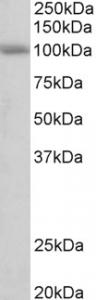
Primary Antibodies
| Catalog No. | Host | Iso. | Clone | Pres. | React. | Applications | |
|---|---|---|---|---|---|---|---|
| TA311465 | SIDT1 (334-347) antibody |
||||||
| Goat Anti-SIDT1 (aa334-347) Antibody | |||||||
 |
Goat | Aff - Purified | Hu, Ms, Rt | E, WB |
0.1 mg /
€360.00
|
||
| OriGene Technologies, Inc. | |||||||
Mouse Lenti ORF Particles
| Catalog No. | ||
|---|---|---|
| MR207112L2V | Lenti ORF particles, Sidt1 (GFP-tagged) - Mouse SID1 transmembrane family, member 1 (cDNA clone MGC:32412 IMAGE:5039343), 200 uL, >10^7 TU/mL |
|
 |
200 µl /
€1,240.00
|
|
| OriGene Technologies, Inc. | ||
| MR210846L2V | Lenti ORF particles, Sidt1 (GFP-tagged) - Mouse SID1 transmembrane family, member 1 (Sidt1), transcript variant 2, 200 uL, >10^7 TU/mL |
|
|
200 µl /
€1,640.00
|
|
| OriGene Technologies, Inc. | ||
| MR207112L1V | Lenti ORF particles, Sidt1 (Myc-DDK-tagged) - Mouse SID1 transmembrane family, member 1 (cDNA clone MGC:32412 IMAGE:5039343), 200 uL, >10^7 TU/mL |
|
|
200 µl /
€1,110.00
|
|
| OriGene Technologies, Inc. | ||
| MR210846L1V | Lenti ORF particles, Sidt1 (Myc-DDK-tagged) - Mouse SID1 transmembrane family, member 1 (Sidt1), transcript variant 2, 200 uL, >10^7 TU/mL |
|
|
200 µl /
€1,470.00
|
|
| OriGene Technologies, Inc. | ||