SSTR3 antibody
Principal name
SSTR3 antibody
Alternative names for SSTR3 antibody
Somatostatin receptor type 3, SS-3-R, SS3-R, SS3R, SSR-28
Ncbi ID
9606, NM_001051, NP_001042.1, NP_598206.1, NP_001042, NM_133522
Available reactivities
Available hosts
Available applications
Enzyme Immunoassay (E), Western blot / Immunoblot (WB), Paraffin Sections (P)
Background of SSTR3 antibody
Somatostatin (SST) is a small cyclic peptide that was first identified as a powerful inhibitor of the secretion of various hormones including growth hormone (GH), thyroid-stimulating hormone (TSH) and prolactin from the pituitary, as well as practically every major hormone from the intestil tract. SST consists of two major bioactive forms, SST-14 and the N-terminus extended peptide SST-28 that can be produced by a wide variety of neuroendocrine, inflammatory and immune cells. SST induces in target cells a variety of physiological functions that include nueromodulation, cell secretion, cell proliferation and smooth muscle contractility. SST acts on its multiple cell targets via a family of six receptors that are origited form five genes: SSTR1, SSTR2a, SSTR2b, SSTRR3, SSTR4, SSTR5. The SSTRs are members of the G-protein coupled receptor superfamily and they modulate cell response via multiple second messenger systems such as inhibition of adenylate cyclase, modulation of conductance of ion channels and protein dephosphorylation. SSTRs are expressed widely in both the brain and peripheral tissues but with receptor subtype variations between the different cell types. Thus, SSTR3 expression in the brain is primarily concentrated in the cerebellum with lesser expression in peripheral organs such as the spleen, the liver and the pituitary. Strong SSTR expression has been detected in a variety of human tumors including pancreatic, breast, lung and prostate cancers. In fact, SST has been shown to inhibit the growth of various normal and tumor cells. On this basis several long lasting SST alogs have been developed and are being tested for use in several pathologies such as various cancers, acromegaly, immunoproliferative disorders, diabetic retinopathy, epilepsy and pain.
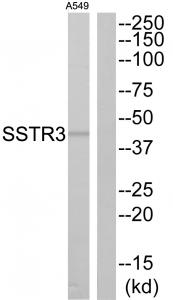

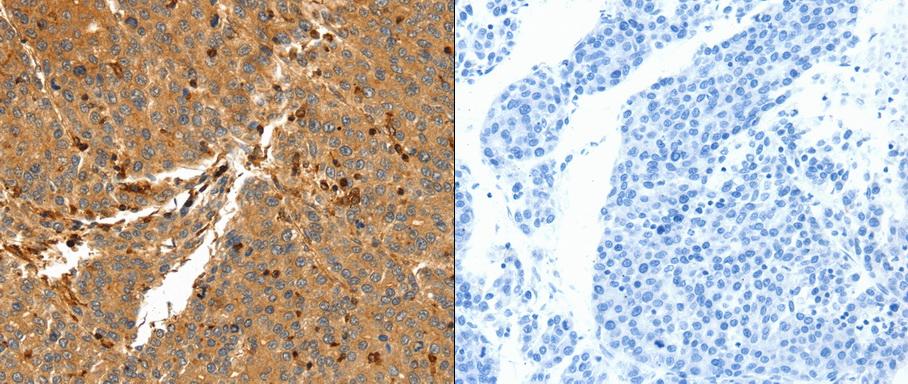
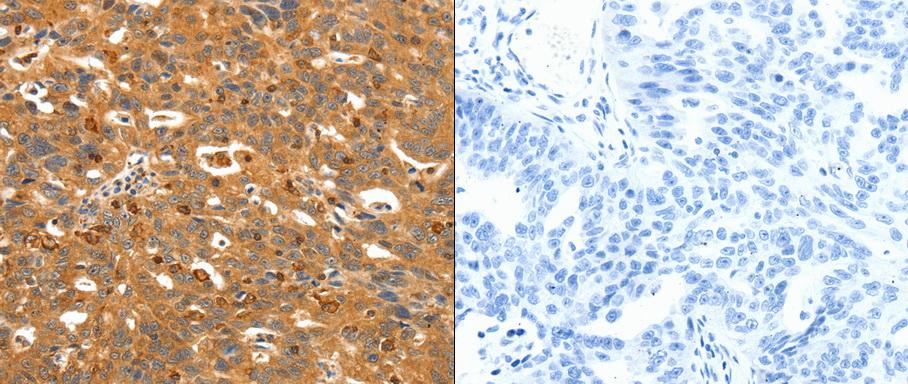

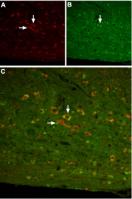
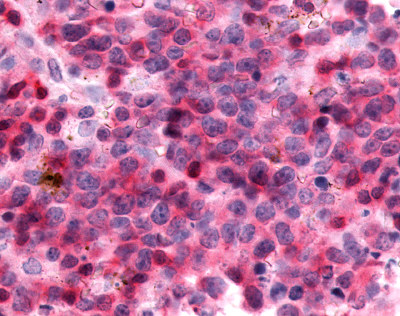

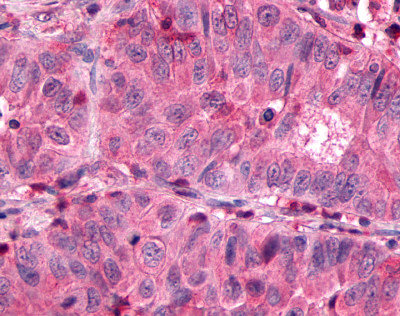

Primary Antibodies
| Catalog No. | Host | Iso. | Clone | Pres. | React. | Applications | |
|---|---|---|---|---|---|---|---|
| TA314570 | SSTR3 antibody |
||||||
| Rabbit polyclonal anti-SSTR3 antibody | |||||||
 |
Rabbit | IgG | Purified | Hu | E, WB |
0.1 ml /
€335.00
|
|
| OriGene Technologies, Inc. | |||||||
| TA323275 | SSTR3 antibody |
||||||
| Anti-SSTR3 Rabbit Polyclonal Antibody | |||||||
 |
Rabbit | IgG | Purified | Hu, Ms, Rt | E, P |
0.1 ml /
€335.00
|
|
| OriGene Technologies, Inc. | |||||||
| TA323276 | SSTR3 antibody |
||||||
| Anti-SSTR3 Rabbit Polyclonal Antibody | |||||||
 |
Rabbit | IgG | Purified | Hu, Ms, Rt | E, P |
0.1 ml /
€335.00
|
|
| OriGene Technologies, Inc. | |||||||
 +1 additional image +1 additional image |
|||||||
| TA329050 | SSTR3 antibody |
||||||
| Rabbit polyclonal Anti-Somatostatin Receptor Type 3 (intracellular) | |||||||
 |
Rabbit | Purified | Ms, Rt | WB |
0.2 ml /
€585.00
|
||
| OriGene Technologies, Inc. | |||||||
| +1 additional image |
|||||||
| TA340554 | SSTR3 (C-term) antibody |
||||||
| Rabbit Polyclonal Anti-SSTR3 Antibody (C-Terminus) | |||||||
 |
Rabbit | Aff - Purified | Hu, Mky, Prim | P |
50 µg /
€425.00
|
||
| OriGene Technologies, Inc. | |||||||
Lysates
| Catalog No. | ||
|---|---|---|
| LY420702 | SSTR3 overexpression lysate |
|
|
0.1 mg /
€495.00
|
|
| OriGene Technologies, Inc. |
Rat Lenti ORF Particles
| Catalog No. | ||
|---|---|---|
| RR202611L2V | Lenti ORF particles, Sstr3 (GFP-tagged ORF) - Rat somatostatin receptor 3 (Sstr3), 200 uL, >10^7 TU/mL |
|
|
200 µl /
€930.00
|
|
| OriGene Technologies, Inc. | ||
| RR202611L1V | Lenti ORF particles, Sstr3 (Myc-DDK-tagged ORF) - Rat somatostatin receptor 3 (Sstr3), 200 uL, >10^7 TU/mL |
|
|
200 µl /
€830.00
|
|
| OriGene Technologies, Inc. | ||