VEGF-A antibody
Principal name
VEGF-A antibody
Alternative names for VEGF-A antibody
VEGFA, VEGF, VPF, Vascular endothelial growth factor A, Vascular permeability factor
SwissProt ID
P15691 (Bovin), P15692 (Human), P16612 (Rat), P26617 (Cavpo), P49151 (Pig), P50412 (Sheep), P67964 (Chick), Q00731 (Mouse), Q99PS1 (Mesau), Q9GKR0 (Horse), Q9MYV3 (Canfa)
Ncbi ID
NP_001020537.2, NP_001003175.2, NP_001020421.2, NP_001103803.1, 9606, NP_776641.1, NP_001020541, NP_001020428, 10090, 10116, NP_001103803, NP_001020537, NP_001020421, NM_001204385, NP_114024.2, NP_001020539.2, NP_001165097, NP_001103804, NP_033531, AAA40547, AAL07526.1, NM_001033756, NM_001025366, NM_001025368, NM_001025370, NP_001103736, NP_001028928, NP_003367, NM_001025250, NM_001110336, NM_001110333, NM_001025257, NM_001110266, NM_001110267, NM_001110268, NM_031836, NM_001110334, NM_001110335, NM_001171630, NM_001171628, NM_001171627, NM_001171625, NM_001171624, NM_001171623, NM_001171622, NM_001025369
Available reactivities
Available hosts
Available applications
Paraffin Sections (P), Enzyme Immunoassay (E), Western blot / Immunoblot (WB), Functional assay (FN), Immunocytochemistry/Immunofluorescence (ICC/IF), Immunoprecipitation (IP), Frozen Sections (C), Radioimmunoassay (R), ELISA (detection) (E(detection))
Background of VEGF-A antibody
Vascular endothelial growth factor (VEGF or VEGF-A), also known as vascular permeability factor (VPF), is a potent mediator of both angiogenesis and vasculogenesis in the fetus and in adults . It is a member of the PDGF family that is characterized by the presence of eight conserved cysteine residues in a cystine knot structure and formation of anti-parallel disulfide-linked dimers . Alternately spliced isoforms of 120, 164, and 188 amino acids (aa) have been found in rats and mice, while 121, 145, 165, 183, 189, and 206 aa isoforms have been identified in humans . In humans, VEGF165 appears to be the most abundant and potent isoform, followed by VEGF121 and VEGF189 . The same pattern may exist in rats and mice. Isoforms other than VEGF120 and VEGF121 contain basic heparin-binding regions and are not freely diffusible . Rat VEGF164 shares 97% aa sequence identity with corresponding regions of mouse, 88% with human and bovine, 89% with porcine and canine, and 90% with feline and equine VEGF. VEGF is expressed in multiple cells and tissues including skeletal and cardiac muscle , hepatocytes , osteoblasts , neutrophils , macrophages , keratinocytes , brown adipose tissue , CD34+ stem cells , endothelial cells , fibroblasts, and vascular smooth muscle cells . VEGF expression is induced by hypoxia and cytokines such as IL-1, IL-6, IL-8, Oncostatin M, and TNF-. . The isoforms are differentially expressed during development and in the adult .
VEGF dimers bind to two related receptor tyrosine kinases, VEGF R1 (also called Flt-1) and VEGF R2 (Flk-1/KDR) and induce their homodimerization and autophosphorylation . These receptors have seven extracellular immunoglobulin-like domains and an intracellular split tyrosine kinase domain. They are expressed on vascular endothelial cells and a range of non-endothelial cells. Although VEGF affinity is highest for binding to VEGF R1, VEGF R2 appears to be the primary mediator of VEGF angiogenic activity . VEGF165 also binds the semaphorin receptor, neuropilin-1, which promotes complex formation with VEGF R2 .
VEGF is best known for its role in vasculogenesis. During embryogenesis, VEGF regulates the proliferation, migration, and survival of endothelial cells , thus regulating blood vessel density and size but playing no role in determining vascular patterns. VEGF promotes bone formation through osteoblast and chondroblast recruitment and is also a monocyte chemoattractant . In postnatal life, VEGF maintains endothelial cell integrity and is a potent mitogen for micro- and macro-vascular endothelial cells. In adults, VEGF functions mainly in wound healing and the female reproductive cycle . In diseased tissues, VEGF promotes vascular permeability. It is thus thought to contribute to tumor metastasis by promoting both extravasation and tumor angiogenesis . Various strategies have been employed therapeutically to antagonize VEGF-mediated tumor angiogenesis . Circulating VEGF levels correlate with disease activity in autoimmune diseases such as rheumatoid arthritis, multiple sclerosis and systemic lupus erythematosus .
General readings
Conn, G. et al. (1990) J. Biol. Chem. 87:2628.
Ishii, H. et al. (2001) Arch. Oral Biol. 46:77.
Byrne, A.M. et al. (2005) J. Cell. Mol. Med. 9:777.
Robinson, C.J. and S.E. Stringer (2001) J. Cell. Sci. 114:853.
Richardson, R.S. et al. (1999) Am. J. Physiol. 277:H2247.
Sugishita, Y. et al. (2000) Biochem. Biophys. Res. Commun. 268:657.
Yamane, A. et al. (1994) Oncogene 9:2683.
Goad, D.L. et al. (1996) Endocrinology 137:2262.
Gaudry, M. et al. (1997) Blood 90:4153.
Mclaren, J. et al. (1996) J. Clin. Invest. 98:482.
Diaz, B.V. et al. (2000) J. Biol. Chem. 275:642.
Asano, A. et al. (1997) Biochem. J. 328:179.
Bautz, F. et al. (2000) Exp. Hematol. 28:700.
Namiki, A. et al. (1995) J. Biol. Chem. 270:31189.
Nauck, M. et al. (1997) Am. J. Respir. Cell. Mol. Biol. 16:398.
Angelo, L.S. and R. Kurzrock (2007) Clin. Cancer Res. 13:2825.
Neufeld, G. et al. (1999) FASEB. J. 13:9.
Kowalewski, M.P. et al. (2005) Accession #ABB82619.
Pan, Q. et al. (2007) J. Biol. Chem. 282:24049.
Weis, S.M. and D.A. Cheresh (2005) Nature 437:497.
Breier, G. (2000) Semin. Thromb. Hemost. 26:553.
Barleon, B. et al. (1996) Blood 87:3336.
Weis, S.M. and D.A. Cheresh (2005) Nature 437:497.
Thurston, G. (2002) J. Anat. 200:575.
Grothey, A. and E. Galanis (2009) Nat. Rev. Clin. Oncol. 6:507.
Carvalho, J.F. et al. (2007) J. Clin. Immunol. 27:246.
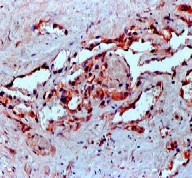
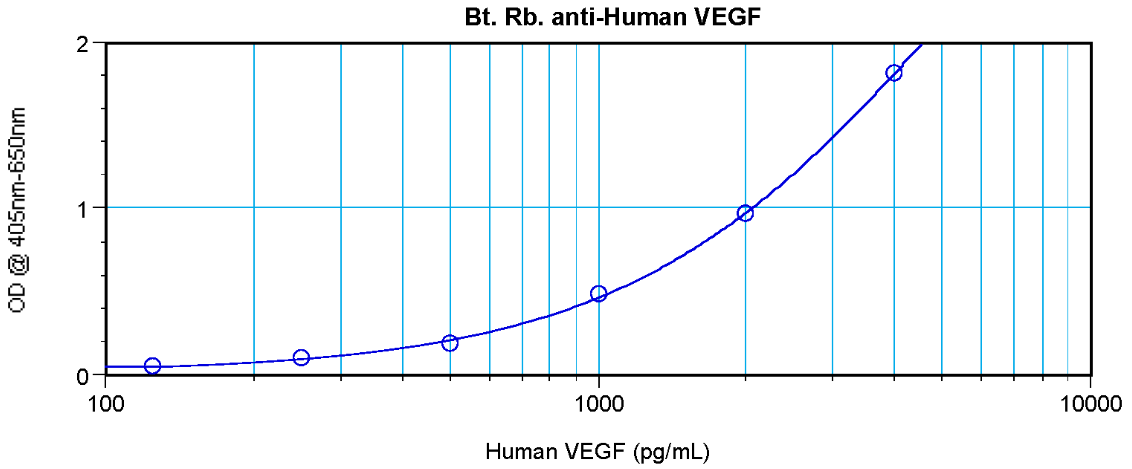
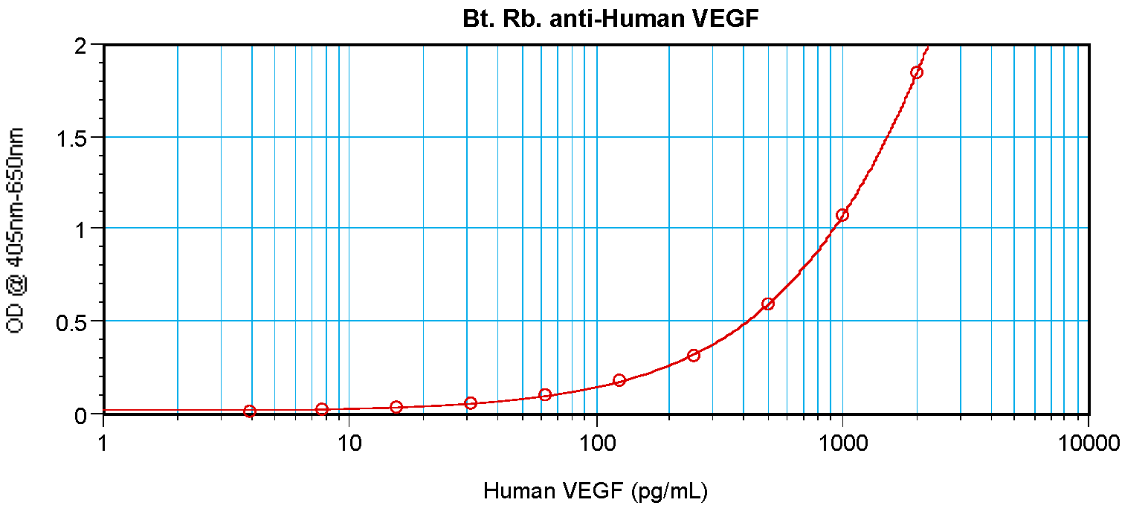
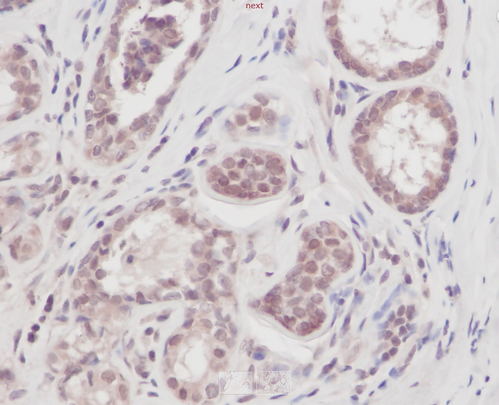
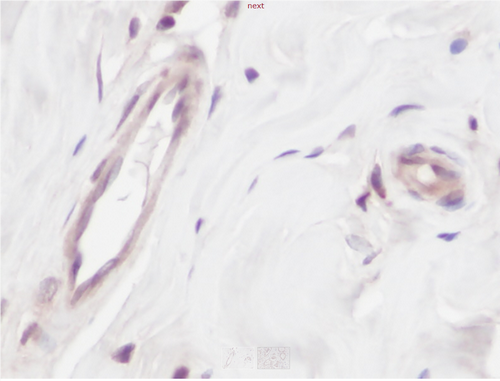
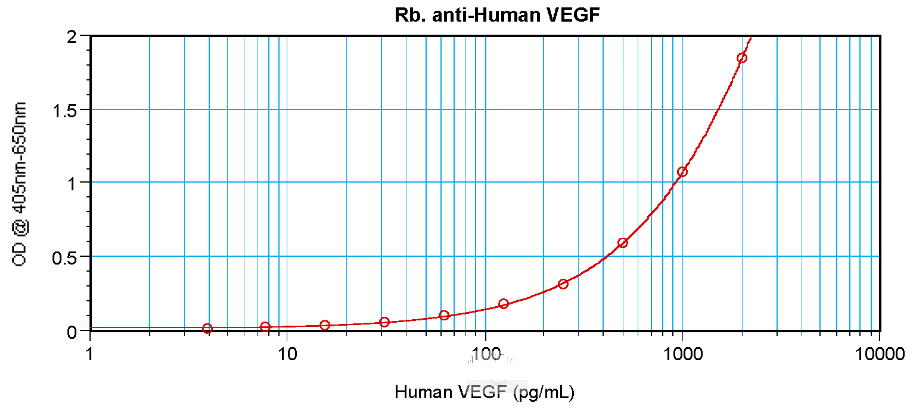
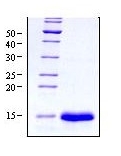
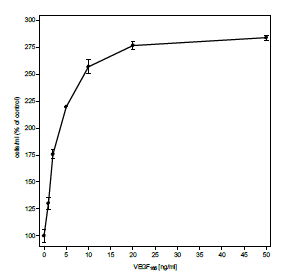
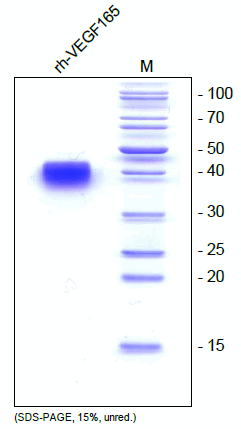
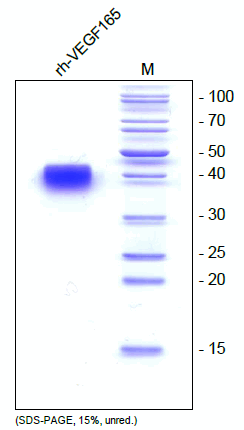
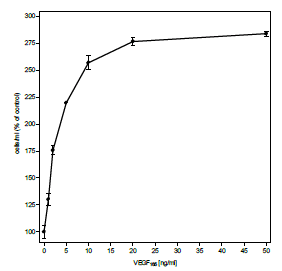


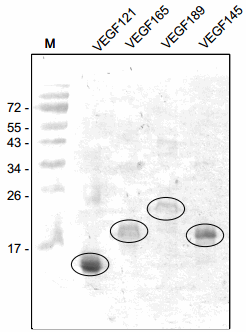
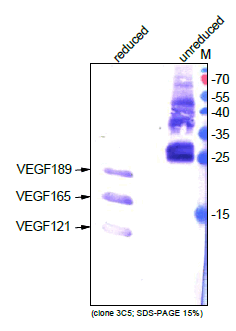
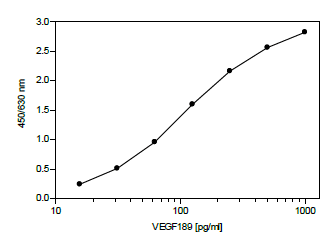
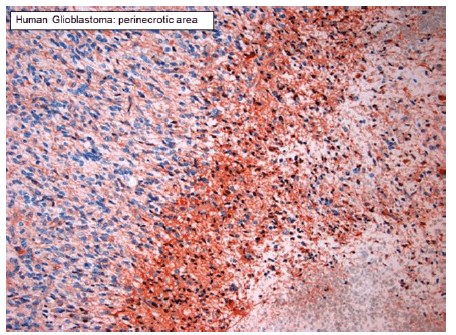

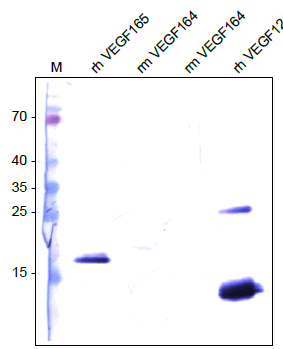

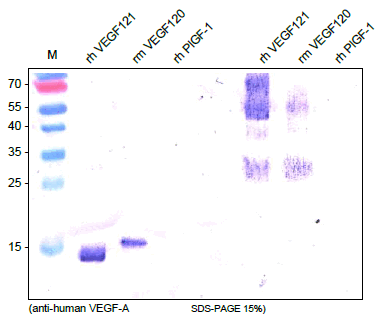
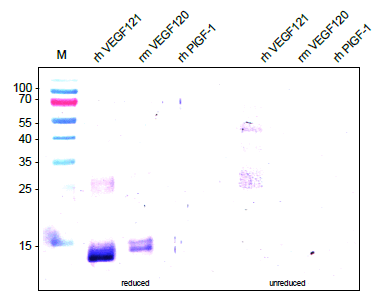
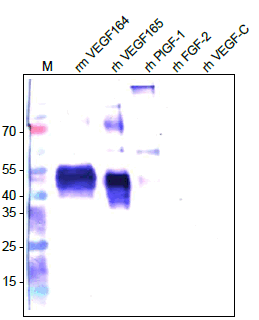
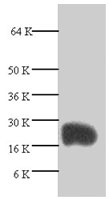
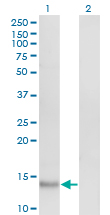
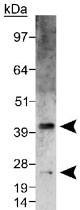
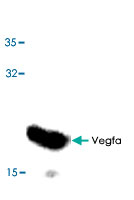
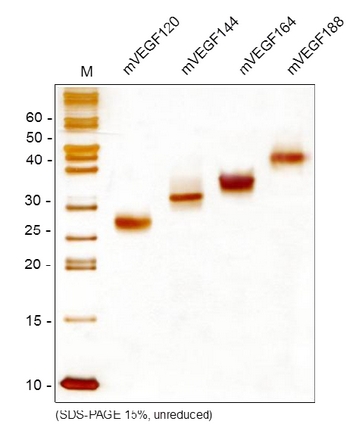
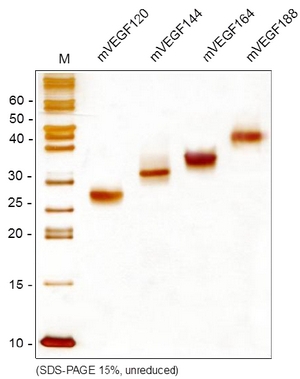
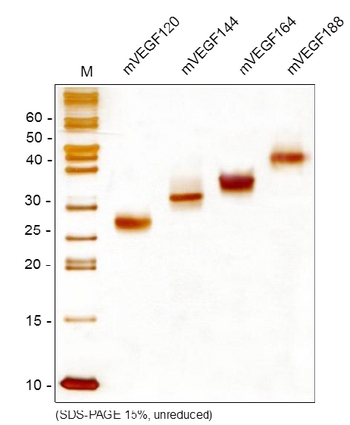
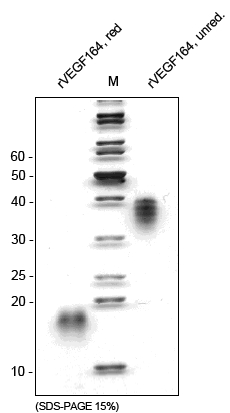
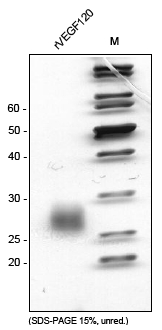
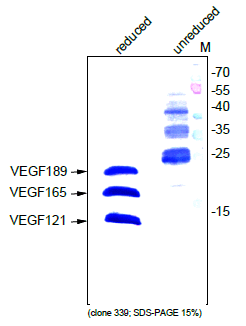
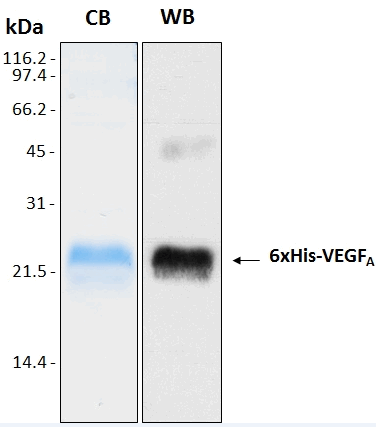
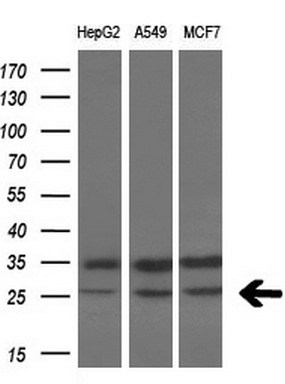
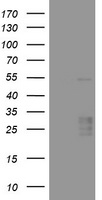
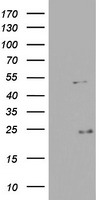
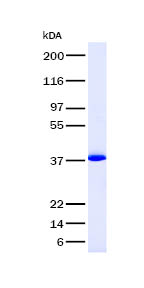
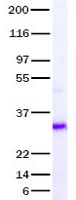
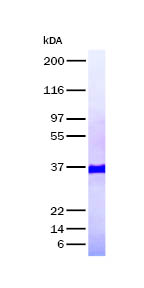
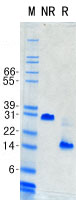
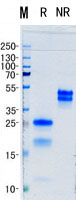
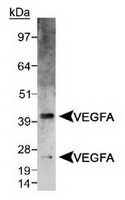
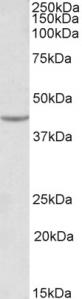
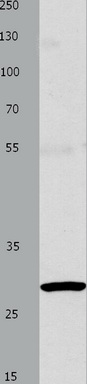
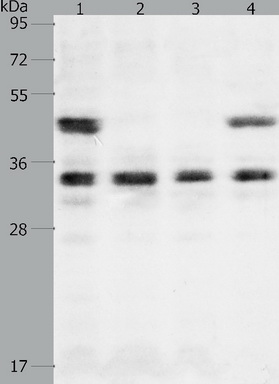
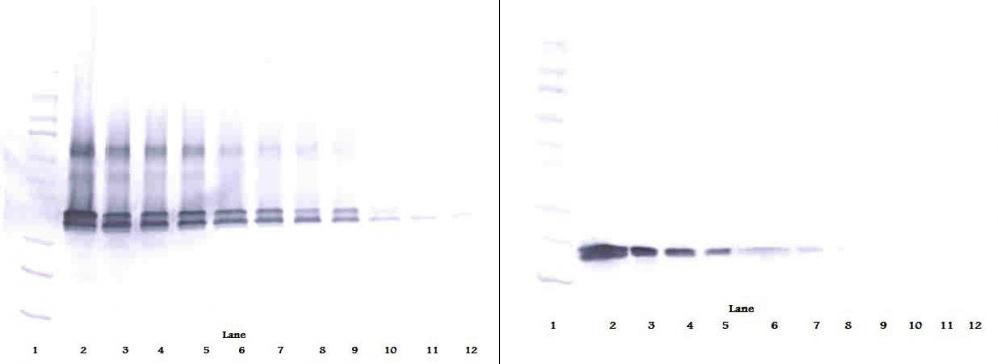
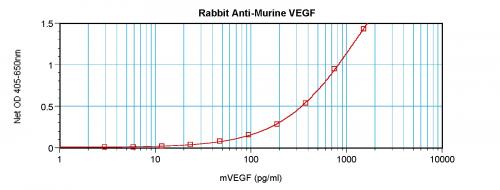
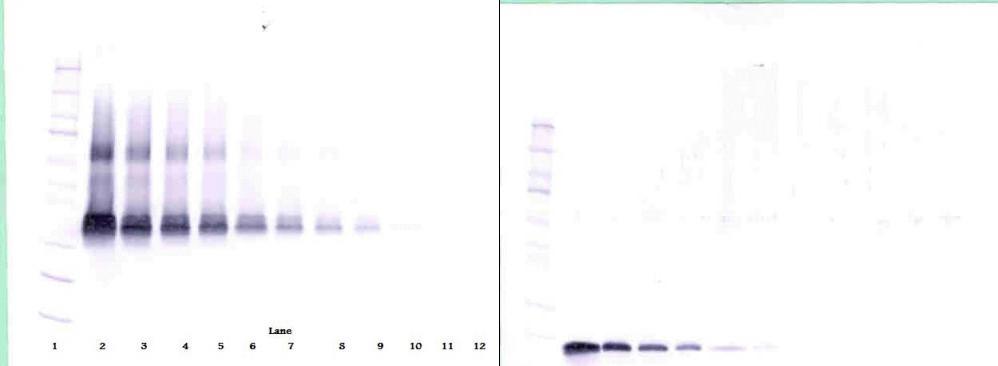
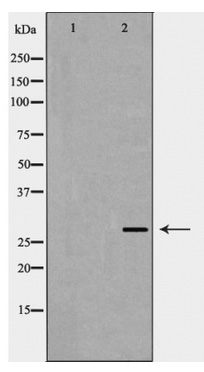
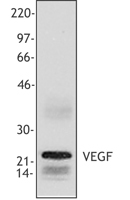
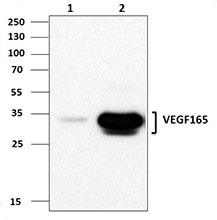
The antibody recognizes the unreduced Human form very weak. There is no signal for the unreduced Mouse VEGF-A. There is a clear cross reactivity with the reduced Mouse VEGF-A visible.




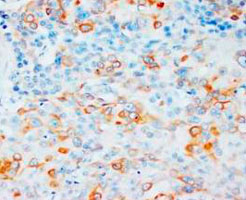
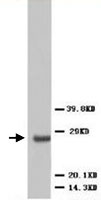
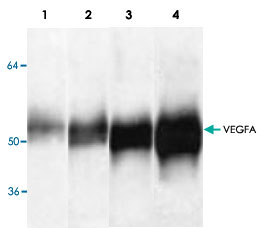
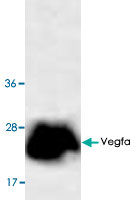



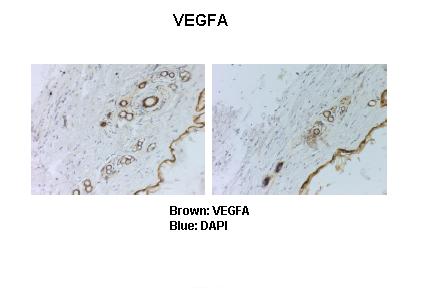

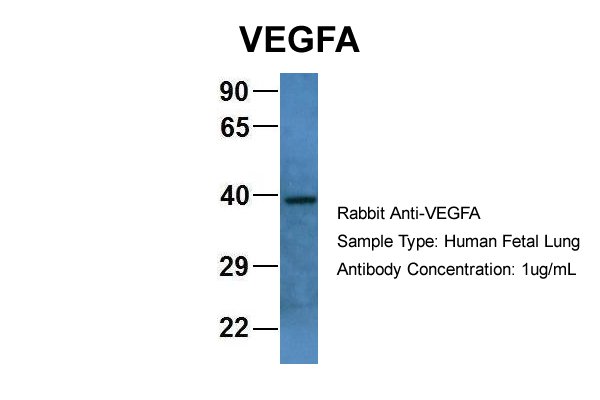
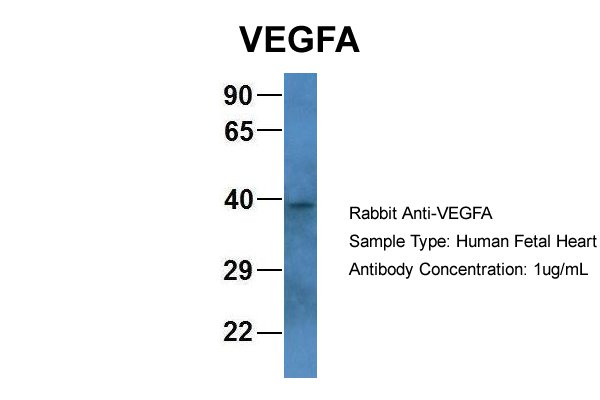
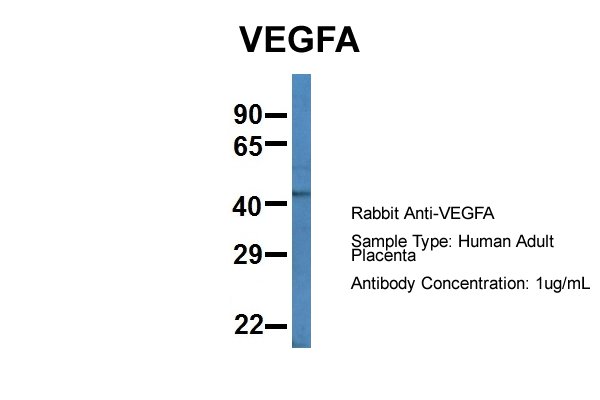









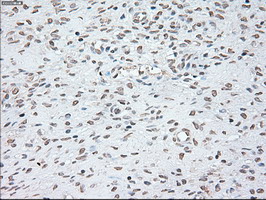
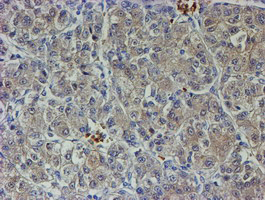
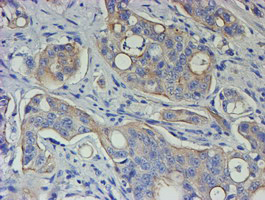
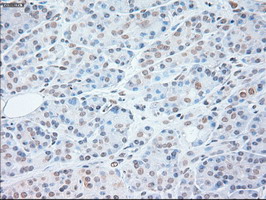
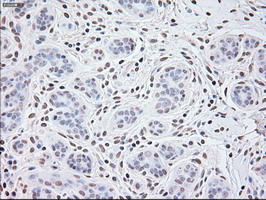
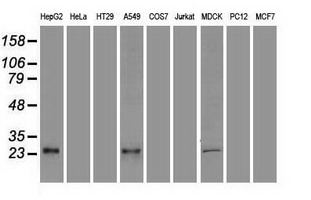
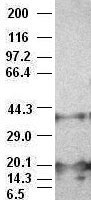
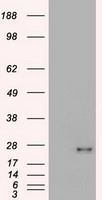
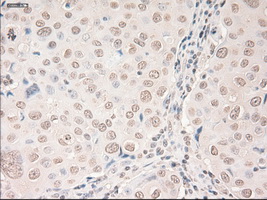
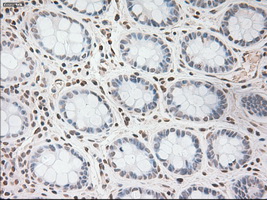
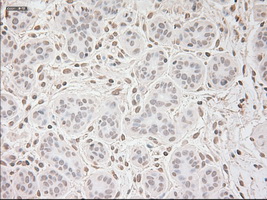
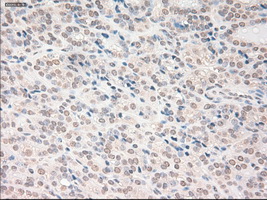
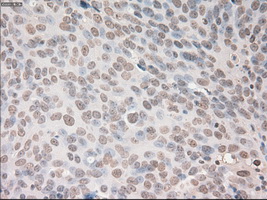
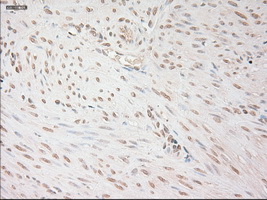
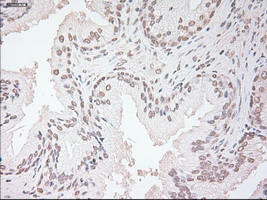
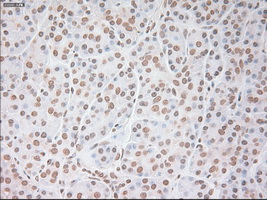

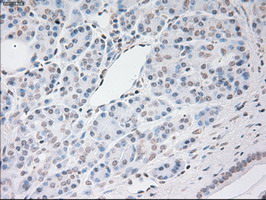

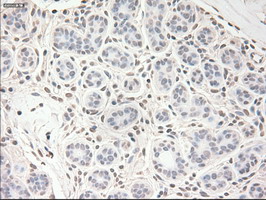
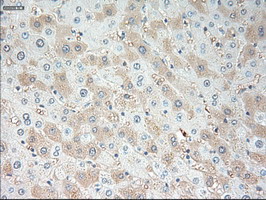
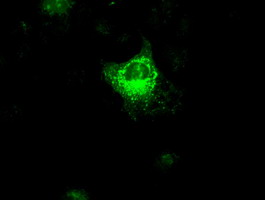




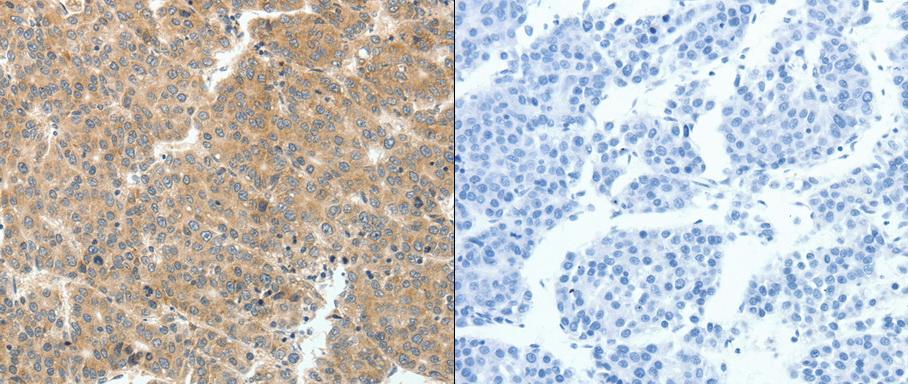
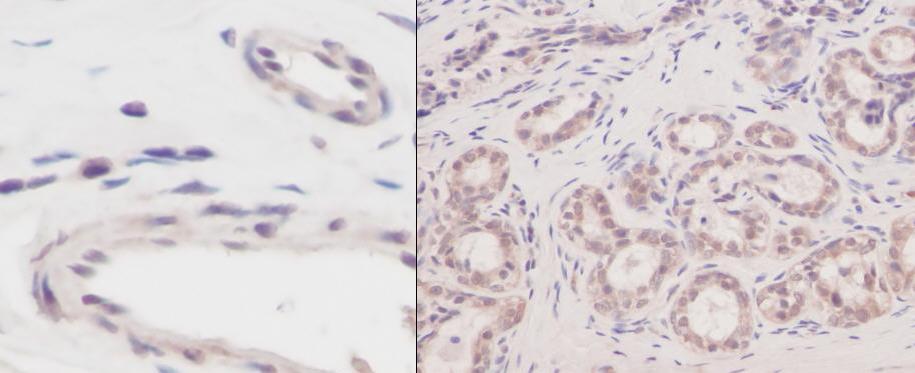
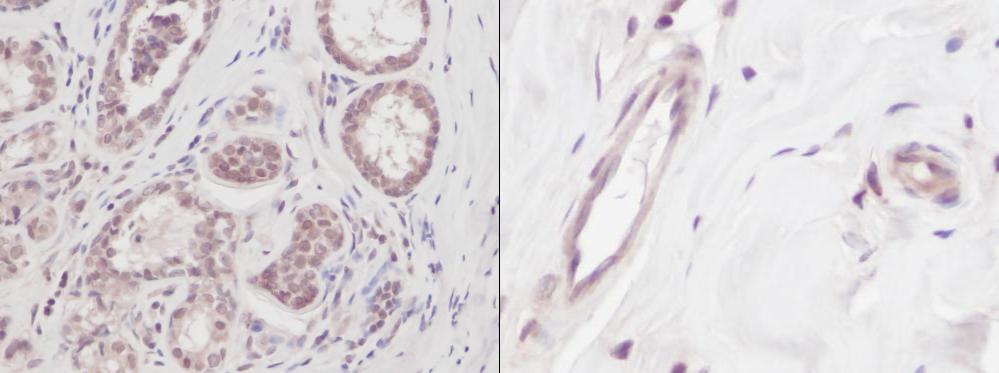

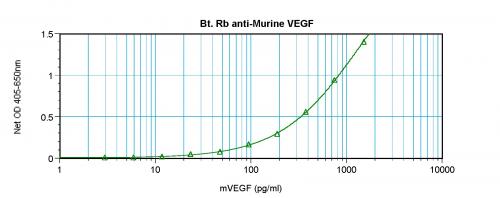


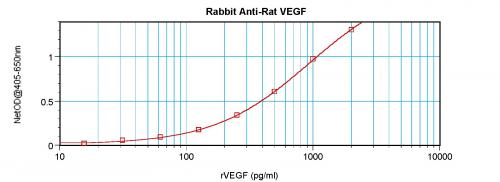
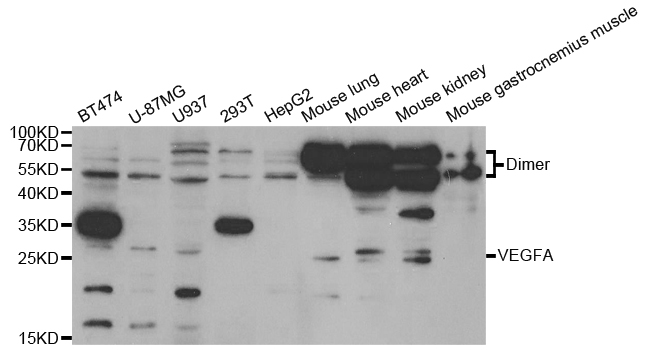
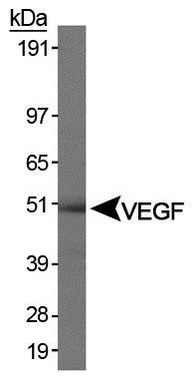
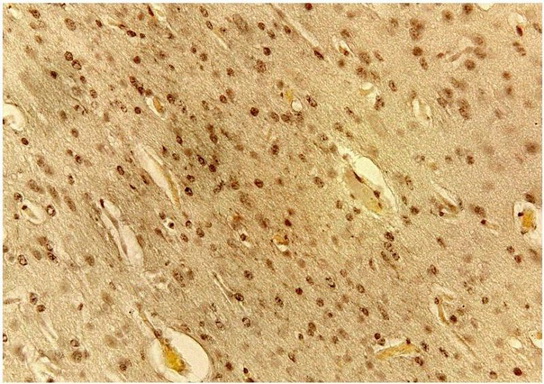
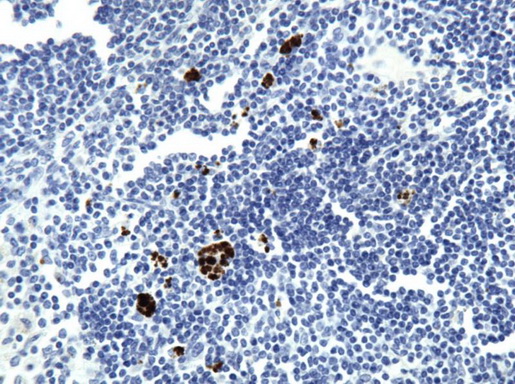
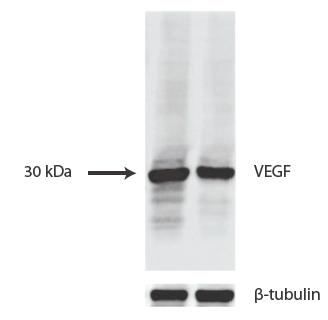
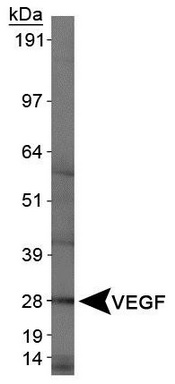
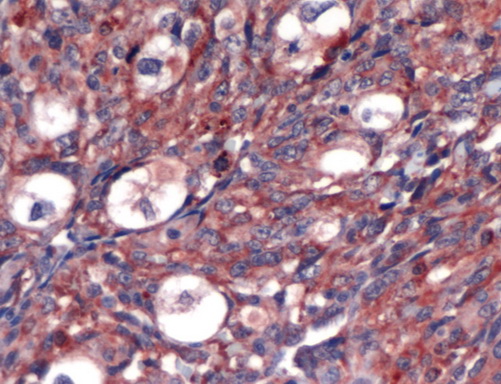
Primary Antibodies
| Catalog No. | Host | Iso. | Clone | Pres. | React. | Applications | |
|---|---|---|---|---|---|---|---|
| AP01112PU-N | VEGF-A antibody |
||||||
 |
Goat | Purified | Hu | E, FN, WB |
0.1 mg /
€340.00
|
||
| OriGene Technologies GmbH | |||||||
| AP01112PU-S | VEGF-A antibody |
||||||
|
Goat | Purified | Hu | E, FN, WB |
50 µg /
€250.00
|
||
| OriGene Technologies GmbH | |||||||
| DM3519P | VEGF-A (Isoform 165) antibody |
||||||
 |
Mouse | IgG1 | 3 | Purified | Hu | E, FN, WB |
0.2 mg /
€330.00
|
| OriGene Technologies GmbH | |||||||
| DP3504 | VEGF-A (Isoform 165) antibody |
||||||
 |
Rabbit | Azide Free | Hu | E, FN, IP |
0.2 mg /
€290.00
|
||
| OriGene Technologies GmbH | |||||||
| DP3504S | VEGF-A (Isoform 165) antibody |
||||||
|
Rabbit | Azide Free | Hu | E, FN, IP, WB |
0.1 mg /
€230.00
|
||
| OriGene Technologies GmbH | |||||||
| PP1073P1 | VEGF-A antibody |
||||||
 |
Rabbit | Aff - Purified | Hu | E, FN, WB |
50 µg /
€250.00
|
||
| OriGene Technologies GmbH | |||||||
 +2 additional images +2 additional images |
|||||||
| PP1073P2 | VEGF-A antibody |
||||||
|
Rabbit | Aff - Purified | Hu | E, FN, WB |
0.1 mg /
€340.00
|
||
| OriGene Technologies GmbH | |||||||
| +2 additional images |
|||||||
| PP1113P1 | VEGF-A antibody |
||||||
 |
Rabbit | Aff - Purified | Ms | E, FN, P, WB |
50 µg /
€250.00
|
||
| OriGene Technologies GmbH | |||||||
| PP1113P2 | VEGF-A antibody |
||||||
|
Rabbit | Aff - Purified | Ms | E, FN, P, WB |
0.1 mg /
€340.00
|
||
| OriGene Technologies GmbH | |||||||

