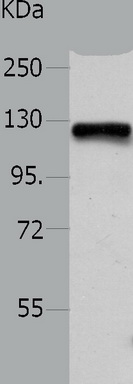
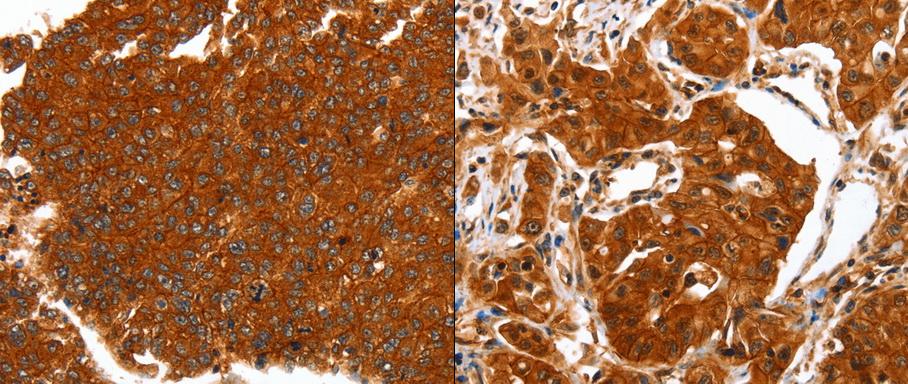
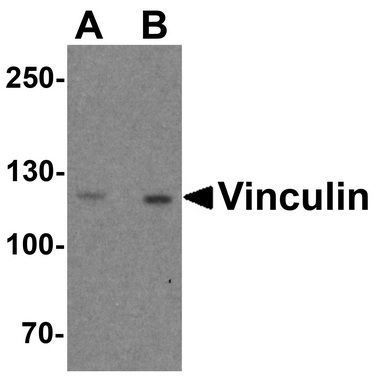
Vinculin (VCL) antibody
Principal name
Vinculin (VCL) antibody
Alternative names for Vinculin (VCL) antibody
Metavinculin
SwissProt ID
O46037 (Drome), P12003 (Chick), P18206 (Human), P26234 (Pig), P85972 (Rat), Q04615 (Xenla), Q64727 (Mouse)
Ncbi ID
NP_003364.1, 9606, NP_003364, NM_003373, AAH39174.1, NM_009502, NM_001107248
Available reactivities
Available hosts
Available applications
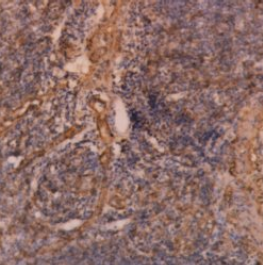
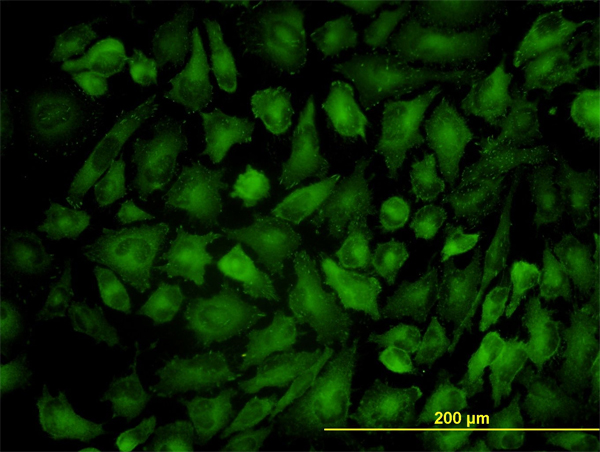
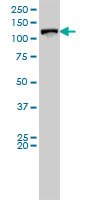
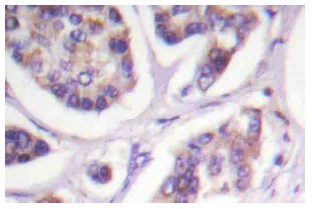
Frozen Sections (C), Immunoprecipitation (IP), Western blot / Immunoblot (WB), Flow Cytometry (F), Paraffin Sections (P), Enzyme Immunoassay (E), Immunocytochemistry/Immunofluorescence (ICC/IF), ELISA (detection) (E(detection))
Background of Vinculin (VCL) antibody
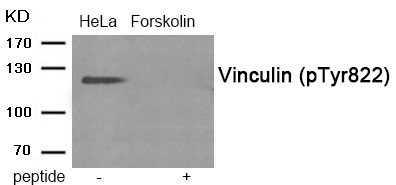
Vinculin is a cytoskeletal protein that plays an important role in the regulation of focal adhesions and embryonic development. Three structural vinculin domains include an amino-termil head, a short, flexible proline-rich region and a carboxy-termil tail. In the ictive state, the head and tail domains of vinculin interact to form a closed confirmation. The open and active form of vinculin translocates to focal adhesions where it is thought to be involved in anchoring F-actin to the membrane and regulation of cell migration. Phospholipid binding to the tail domain and subsequent phosphorylation of vinculin at Ser1033 and Ser1045 by PKC-a and Tyr100 and Tyr1065 by Src kises weakens the head-tail interaction. This change in vinculin allows the binding of a number of other proteins, including talin, a-actinin and paxillin, which disrupts the head-tail interaction and initiates the conformatiol change from the ictive to active state. Vinculin deficiencies are associated with a decrease in cell adhesion and an increase in cell motility, suggesting a possible role in metastatic growth. This is supported by a recently demonstrated relationship between decreased vinculin expression and increased carcinogenesis and metastasis in colorectal carcinoma.
General readings
1. Bakolitsa, C., Cohen, D. M., Bankston, L. A., Bobkov, A. A., Cadwell, G. W., Jennings, L., Critchley,
D. R., Craig, S. W., Liddington, R. C.Structural basis for vinculin activation at sites of cell
adhesion.Nature 430: 583-586, 2004.
2. Mulligan, L. M., Gardner, E., Telenius, H., Ponder, B. A. J.Complementary physical and genetic
techniques map the vinculin (VCL) gene on chromosome 10q.Genomics 13: 1347-1349, 1992.
3. Vasile, V. C., Edwards, W. D., Ommen, S. R., Ackerman, M. J.Obstructive hypertrophic
cardiomyopathy is associated with reduced expression of vinculin in the intercalated disc.Biochem.
Biophys. Res. Commun. 349: 709-715, 2006.
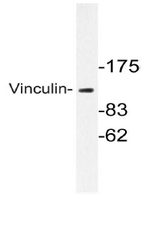

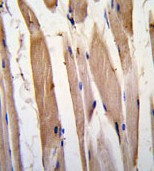
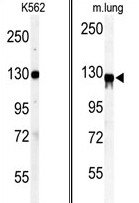

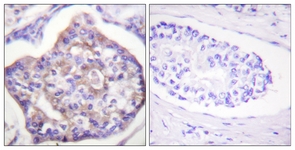





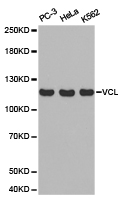

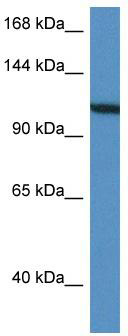

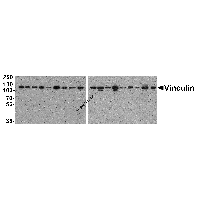
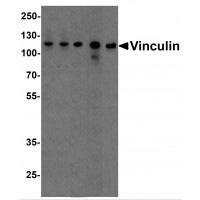
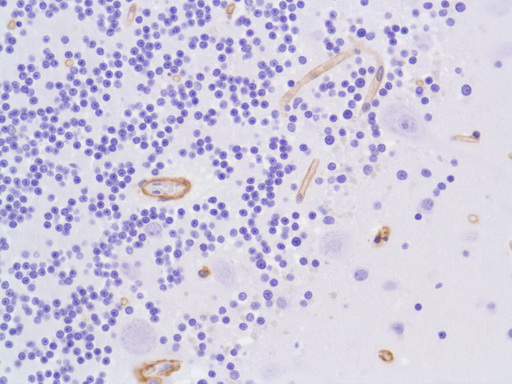
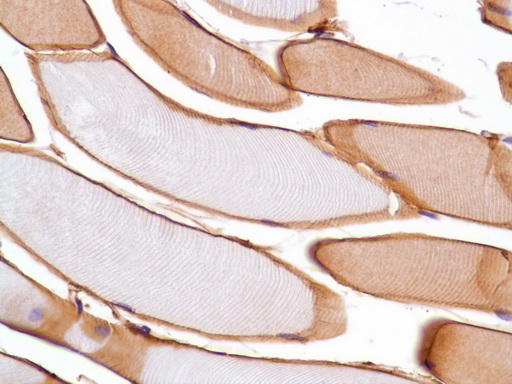
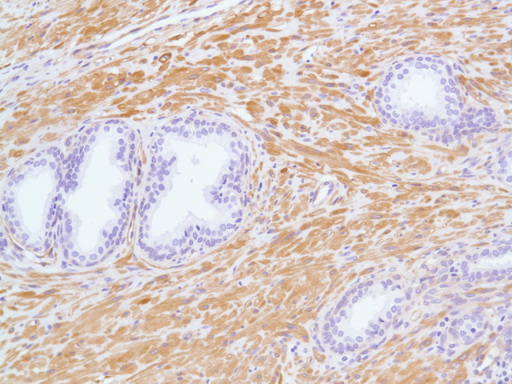
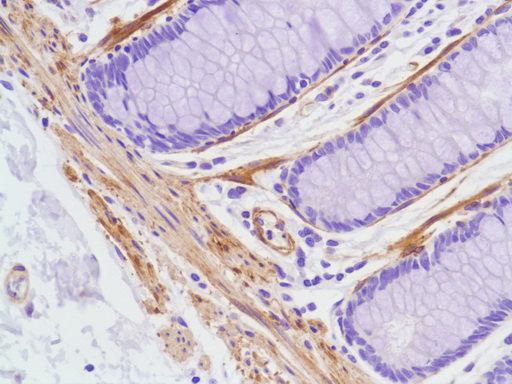

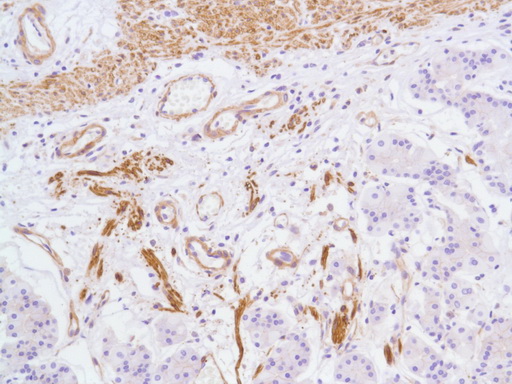
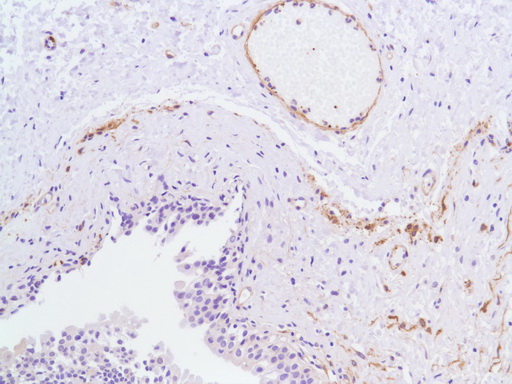
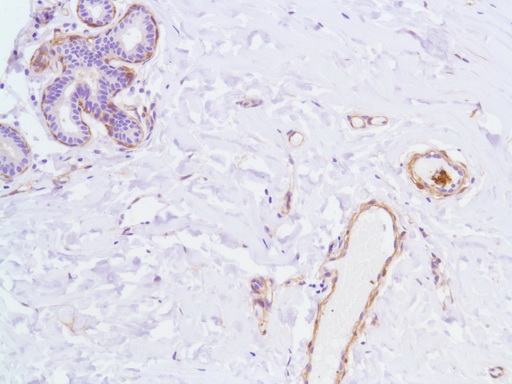
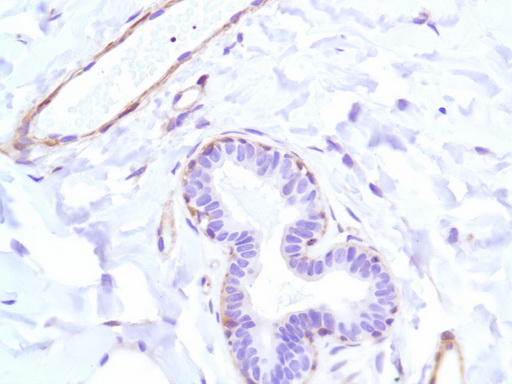

- Quick-Filters:
- Highly Validated (remove)
Primary Antibodies
| Catalog No. | Host | Iso. | Clone | Pres. | React. | Applications | |
|---|---|---|---|---|---|---|---|
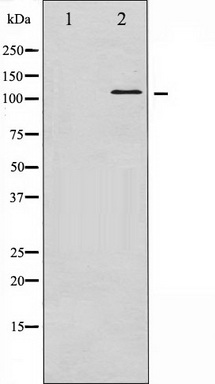
| AP31334PU-N | Vinculin (VCL) antibody |
||||||
 |
Rabbit | IgG | Purified | Hu, Ms, Rt | E, ICC/IF, P, WB |
50 µl /
€425.00
|
|
| OriGene Technologies GmbH | |||||||
 +3 additional images +3 additional images |
Highly validated antibody! |
||||||