MSH2 antibody
Principal name
MSH2 antibody
Alternative names for MSH2 antibody
DNA mismatch repair protein Msh2, MutS protein homolog 2
Ncbi ID
NP_000242.1, 9606, AAY15096, NP_000242, NP_000239, NM_000251, NP_032654.1, NM_031058
Available reactivities
Available hosts
Available applications
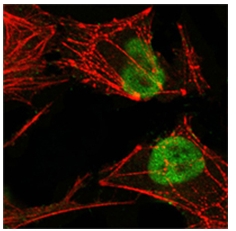
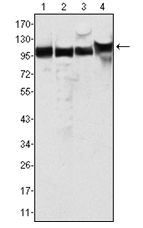
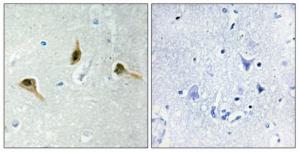
Immunoprecipitation (IP), Western blot / Immunoblot (WB), Paraffin Sections (P), Enzyme Immunoassay (E), ELISA (detection) (E(detection)), Immunocytochemistry/Immunofluorescence (ICC/IF), Flow Cytometry (F), Frozen Sections (C)
Background of MSH2 antibody
Component of the post-replicative D mismatch repair system (MMR). Forms two different heterodimers: MutS alpha (MSH2-MSH6 heterodimer) and MutS beta (MSH2-MSH3 heterodimer) which binds to D mismatches thereby initiating D repair. When bound, heterodimers bend the D helix and shields approximately 20 base pairs. MutS alpha recognizes single base mismatches and dinucleotide insertion-deletion loops (IDL) in the D. MutS beta recognizes larger insertion-deletion loops up to 13 nucleotides long. After mismatch binding, MutS alpha or beta forms a terry complex with the MutL alpha heterodimer, which is thought to be responsible for directing the downstream MMR events, including strand discrimition, excision, and resynthesis. ATP binding and hydrolysis play a pivotal role in mismatch repair functions. The ATPase activity associated with MutS alpha regulates binding similar to a molecular switch: mismatched D provokes ADP-->ATP exchange, resulting in a discernible conformatiol transition that converts MutS alpha into a sliding clamp capable of hydrolysis-independent diffusion along the D backbone. This transition is crucial for mismatch repair. MutS alpha may also play a role in D homologous recombition repair. In melanocytes may modulate both UV-B-induced cell cycle regulation and apoptosis.
General readings
Kim, M. et al., Cancer Sci. 101(11): 2436-2442 (2010)
Mangoni, M. et al., Int. J. Radiat. Oncol. Biol. Phys. 81(1): 52-58 (2010)
Srivastava, K. et al., Cancer 116(13): 3160-3169 (2010)
van der Post, R.S. et al., J. Med. Genet. 47(7): 464-470 (2010)
Langner, E.,et al., J. Genet. 89(1): 101-104 (2010)








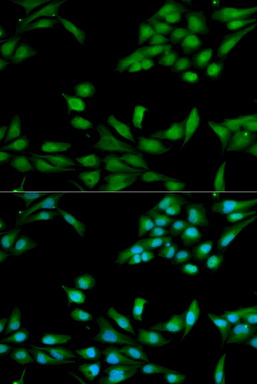
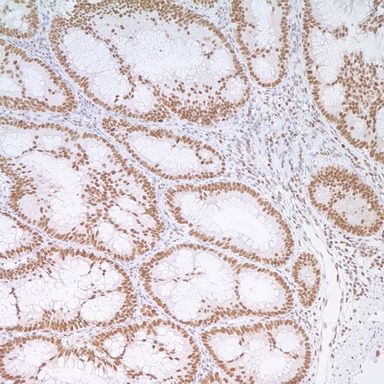
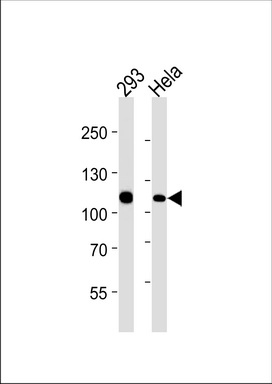
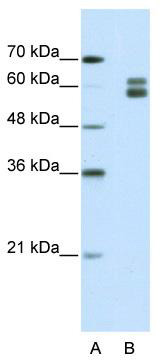
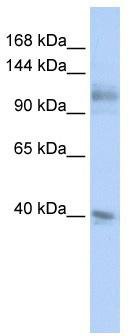
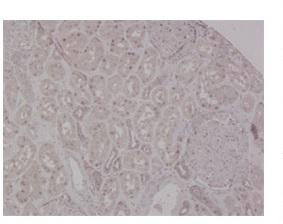
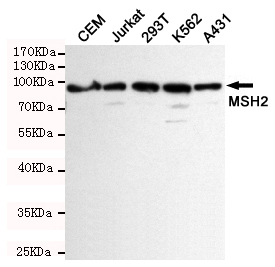
Lysates
| Catalog No. | ||
|---|---|---|
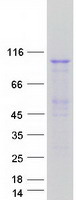
| LY424843 | MSH2 overexpression lysate |
|
 |
0.1 mg /
€295.00
|
|
| OriGene Technologies, Inc. |

