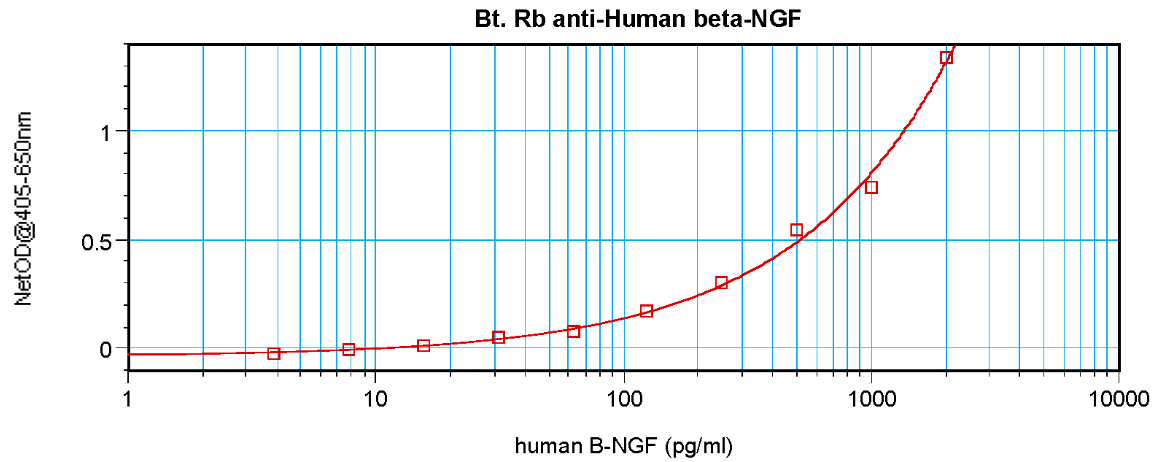
NGF antibody
Principal name
NGF antibody
Alternative names for NGF antibody
Beta-NGF, NGFB,Beta-nerve growth factor
SwissProt ID
P01138 (Human), P01139 (Mouse), P05200 (Chick), P13600 (Bovin), P25427 (Rat), Q29074 (Pig)
Ncbi ID
NP_002497.2, 9606, NP_002497, 10090, NP_001106168, 10116, NP_001106168.1, ADR82879.1, NM_002506, NP_038637, NM_001112698, NM_001277055, NM_013609
Available reactivities
Available hosts
Available applications
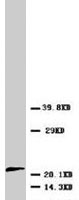
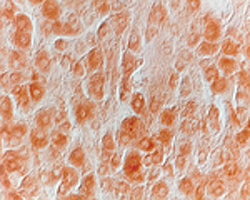
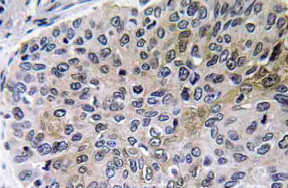
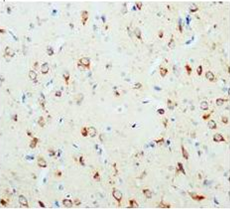
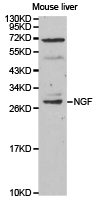
Frozen Sections (C), Enzyme Immunoassay (E), Western blot / Immunoblot (WB), Paraffin Sections (P), Functional assay (FN), Immunoprecipitation (IP), Dot blot (Dot)
Background of NGF antibody
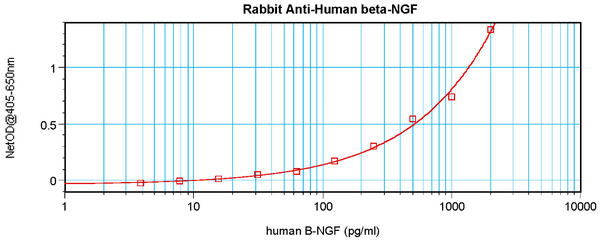
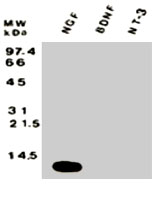
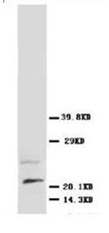
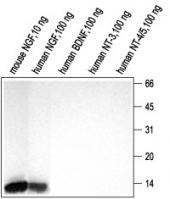
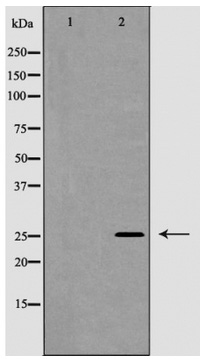
The neurotrophins ("neuro" means nerve and "trophe" means nutrient) are a family of soluble, basic growth factors which regulate neurol development, maintence, survival and death in the CNS and the PNS. NGF, the first member of the family to be discovered, was origilly purified as a factor able to support survival of sympathetic and sensory spil neurons in culture. It is synthesized and secreted by sympathetic and sensory target organs and provides trophic support to neurons as they reach their fil target.Neurotrophin secretion also increases in the nervous system following injury. Schwann cells, fibroblasts, and activated mast cells normally synthesize NGF constitutively, however direct trauma and induced cytokines combine to increase neurotrophin production in these cells after injury.NGF is purified in three forms: the 7S, 2.5S and Ã?. The 7S, 130 kDa, form occurs turally in mouse submaxillary glands, and is a multimeric protein composed of two a, one Ã? and two ? subunits. The me is derived from its sedimentation co-efficient, 7S. The biologically active subunit is the Ã?, which is a 26 kDa dimer composed of two identical 120 amino acid chains held together by hydrophobic interactions.5 The 2.5S form is 9 amino acids shorter than the Ã? form, because of proteolysis that occurs during the purification process. The structural hallmark of all the neurotrophins is the characteristic arrangement of the disulfide bridges known as the cysteine knot, which has been found in other growth factors such as PDGF. There is a 95.8% homology between the rat and mouse forms, and a 85% homology between the human and mouse.NGF has been shown to regulate neurol survival, development function and plasticity. Recently, involvement of NGF in processes not involving neurol cells has been shown, such as asthma, psoriasis10 and wound healing. The biological effects of NGF are mediated by two receptors: TrkA, which is specific for NGF, and p75, which binds all the neurotrophins.


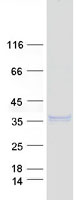
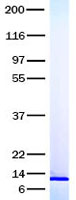
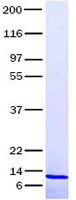



Proteins & Growth Factors
| Catalog No. | Species | Pres. | Purity | Source | |
|---|---|---|---|---|---|
| PR15083-100 | NGF |
||||
 |
Human | Purified | > 97 % | Mouse |
0.1 mg /
€370.00
|
| Neuromics Antibodies | |||||
| PR15084CF-100 | NGF (Carrier Free) |
||||
 |
Human | Purified | > 97 % | Mouse |
0.1 mg /
€370.00
|
| Neuromics Antibodies | |||||
| PR27003-5 | NGF |
||||
 |
Mouse | Purified | > 99.6 % | Mouse |
5 µg /
€190.00
|
| Neuromics Antibodies | |||||
| PR27003-20 | NGF |
||||
|
Mouse | Purified | > 99.6 % | Mouse |
20 µg /
€290.00
|
| Neuromics Antibodies | |||||